Reliable water testing begins with a repeatable method, not a bright display. The 2026 dr300 pocket colorimeter manual guide examines preparation, zeroing, reagent handling, timing, and result verification. These small actions shape the final reading. A dusty vial, wet cap, or delayed reaction can quietly distort chlorine results.
The need is substantial. WHO and UNICEF’s Joint Monitoring Programme reported that 2.2 billion people lacked safely managed drinking water in 2022. The United Nations World Water Development Report 2024 also linked water quality with public health, environmental stability, and community resilience. These figures explain why portable instruments matter in treatment plants, hotels, laboratories, and field inspections. However, a pocket meter cannot repair poor sampling.
Dr. Joan Rose, a recognized water-quality researcher, has repeatedly emphasized that “water quality is a public health issue, not just a regulatory issue.” That principle gives this guide its practical direction. It connects the DR300’s buttons with documented procedures, control checks, and careful interpretation. EPA drinking-water guidance and Standard Methods for the Examination of Water and Wastewater support this measurement-focused approach. Still, no manual is perfect. Users may overlook temperature, sample turbidity, expired reagents, or an incorrect program. This guide addresses those weak points directly, while acknowledging that local regulations and laboratory confirmation may require additional steps. Expect clear instructions, realistic field details, and a few reminders that prevent confident mistakes.
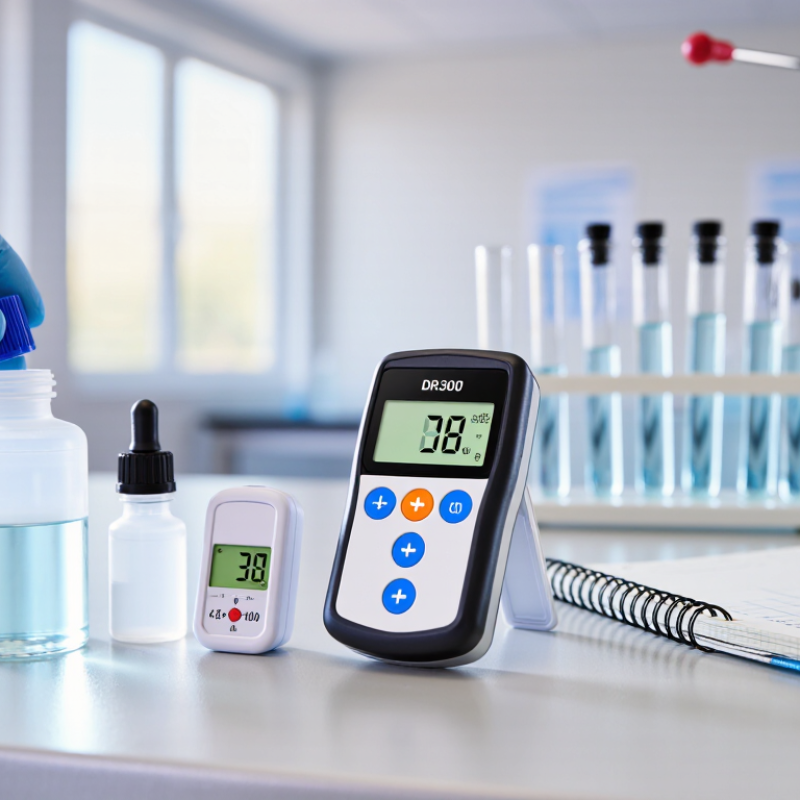
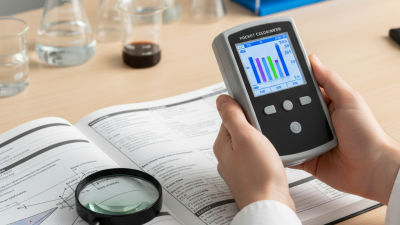
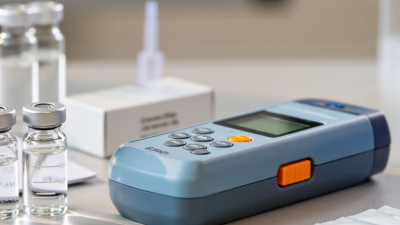
The DR300 Pocket Colorimeter is designed for quick, focused water testing in the field or laboratory. It measures a selected parameter through a controlled color reaction, rather than providing a broad chemical profile. The operator adds the correct reagent, mixes the sample, and waits for the stated reaction time. The instrument then compares the developed color with an internal optical reference. Results appear within seconds. Keep the sample cell clean and free from fingerprints.
Its compact body supports routine checks of treated water, process water, pools, and environmental samples. The display is simple, while the measurement steps are usually practical for trained beginners. Accurate work still depends on preparation. Use clean containers, fresh reagents, and the correct sample volume. Close the cell firmly before reading. Ambient light, bubbles, scratched cells, or incomplete mixing can affect the result.
A useful habit is measuring a second sample when a reading seems unusual. Record the date, sample location, reagent lot, and reaction time. This creates traceable evidence for later decisions. The colorimeter is not a replacement for every laboratory method. Some samples need confirmation with a more advanced technique. A rushed test can look convincing. That is the part worth reconsidering. Always follow the current manual, because procedures and recommended maintenance may change.
| Topic | Purpose or Feature | Measurement Information | Practical User Note |
|---|---|---|---|
| Instrument purpose | A compact colorimeter for estimating the concentration of selected substances in water. | The instrument compares the color developed in a prepared sample with a stored calibration curve. | Use only the test procedure and reagent system specified for the selected parameter. |
| Common applications | Routine checks in drinking water, wastewater, pools, aquaculture, laboratories, and field sampling. | Typical target groups include disinfectant residuals, nutrients, metals, and other color-forming analytes. | The available test menu and range depend on the selected instrument version and approved method. |
| Measurement principle | Photometric measurement of light absorbed or transmitted by a colored solution. | Higher color intensity generally corresponds to a higher analyte concentration within the method range. | Results are valid only when the reaction time, reagent amount, sample volume, and mixing steps are controlled. |
| Displayed result | A numerical concentration reading for the selected test method. | Common reporting units include mg/L, µg/L, or other units defined by the method. | Do not convert units unless the analyte form and conversion factor are clearly identified. |
| Test selection | Select the program or method that matches the reagent chemistry and target analyte. | Each method has its own wavelength, reaction chemistry, range, resolution, and interference profile. | A method designed for one analyte should not be used to report another analyte. |
| Sample preparation | Prepare the sample according to the selected test procedure before inserting the vial or cuvette. | Preparation may include adding powder, tablet, liquid reagent, buffer, or digestion chemicals. | Use clean equipment and avoid fingerprints, droplets, bubbles, and suspended solids on the optical path. |
| Zero or blank step | Establishes the optical reference before the reacted sample is measured. | The blank normally contains the sample water and required blank reagents, but no target reaction contribution. | Use the blank prescribed by the method; an incorrect blank can shift every subsequent result. |
| Reaction timing | Controls the time available for the color-forming chemical reaction. | Some methods require immediate reading, while others require a defined development period. | Start timing consistently after the final reagent is added and mixed. |
| Cuvette handling | Maintains a consistent optical path for light transmission through the sample. | The vial or cuvette must be filled to the specified level and aligned in the correct orientation when required. | Wipe the outside with a lint-free cloth and handle the container by its cap or textured areas. |
| Interferences | Factors that alter the color response without representing the target analyte concentration. | Turbidity, extreme pH, oxidizing or reducing substances, sample color, temperature, and competing ions may affect results. | Review the method limitations and dilute or pretreat samples only when the procedure permits it. |
| Accuracy checks | Confirms that the instrument, reagents, and procedure are operating acceptably. | Use a reagent blank, a known standard, duplicate samples, or a certified quality-control sample when appropriate. | Record the method, lot information, sample identification, result, and any dilution factor. |
| Result outside range | Indicates that the concentration may be below or above the validated method range. | A result above range generally requires an approved dilution and a repeat measurement. | Multiply the measured value by the dilution factor only after confirming that the method allows dilution. |
| Routine maintenance | Keeps the optical chamber, keypad, display, and sample holder in usable condition. | Remove spills promptly, keep the sample compartment dry, and inspect the vial area before testing. | Do not immerse the instrument or use abrasive cleaners on optical or display surfaces. |
| Battery practice | Supports dependable field operation and prevents unexpected shutdown during testing. | Use the battery type and replacement procedure specified for the instrument configuration. | Remove batteries during extended storage when recommended, and dispose of depleted batteries responsibly. |
| Basic measurement sequence | Provides a repeatable workflow for routine analysis. | Select method → prepare blank → zero instrument → prepare reacted sample → observe reaction time → measure → record result. | Repeat the measurement when the sample is visibly cloudy, the result is unexpected, or quality-control criteria are not met. |