How to Choose the Best Portable Conductivity Meter for Your Needs in 2025
In the ever-evolving world of scientific instrumentation, choosing the right portable conductivity meter is crucial for accurate water quality analysis. As technologies advance, the variety of options available can be overwhelming for users. According to Dr. Emily Carter, a leading expert in environmental monitoring, "Understanding the specific requirements of your application is key to selecting the most effective portable conductivity meter." This sentiment resonates deeply as we approach 2025, when precise and portable solutions will play an integral role in both field and laboratory settings.
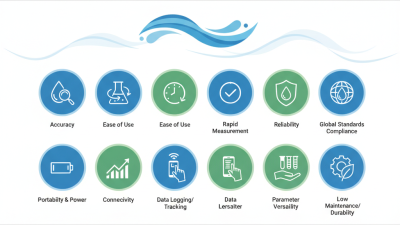
With applications ranging from environmental testing to industrial processes, the right portable conductivity meter can significantly impact the quality of data collected. Potential users must consider various factors—including accuracy, response time, and ease of use—when making their selections. As we delve into the characteristics that define the best portable conductivity meters, it's important to keep in mind the unique needs of your specific application to ensure reliability and efficiency in your measurements. Whether you are a researcher, environmentalist, or industry professional, understanding what to look for will help you make an informed decision.

Understanding Conductivity Meters: Basic Principles and Applications
Conductivity meters are essential instruments used to measure the electrical conductivity of a solution, which indicates the concentration of ions present within it. Understanding the basic principles of conductivity is crucial for selecting the appropriate meter for various applications. The fundamental working principle of these devices relies on the measurement of the ability of a solution to conduct an electric current. This ability is influenced by factors such as the type of ions, their concentration, and the temperature of the solution. Typically, a conductivity meter consists of two electrodes that pass an electrical current through the solution; the resulting changes in voltage are used to calculate conductivity.
The applications of conductivity meters are diverse and can be found across various fields, including environmental monitoring, agriculture, and industrial processes. In agriculture, for instance, soil and water conductivity can provide insights into nutrient availability and soil salinity, thereby enabling better management of irrigation and fertilization. In industrial settings, monitoring the conductivity of cooling water or process fluids is vital to ensure operational efficiency and compliance with quality standards. As the market for portable conductivity meters expands, users must consider specific features such as range, accuracy, and temperature compensation to meet their unique needs in different environments and applications.
Key Features to Consider When Choosing a Portable Conductivity Meter
When selecting the best portable conductivity meter for your specific needs in 2025, there are several key features to consider that will ensure optimal performance and reliability. One of the most critical aspects is measurement range. Different applications, from agricultural soil testing to water quality assessment, require different conductivity ranges. For instance, a meter capable of measuring from 0 to 200 mS/cm would be suitable for many applications, whereas specialized tasks might demand meters with a broader range, accommodating readings beyond 1000 mS/cm. According to a recent industry report, the majority of users prefer meters offering a wide measurement range, as versatility can greatly enhance usability across various fields.
Another essential feature to consider is the accuracy and precision of the meter. This is typically expressed in terms of percentage (%FS) or parts per thousand (ppt). Research indicates that meters with an accuracy rate of ±0.5% or better are ideal for laboratory settings, while those with ±1% accuracy are often sufficient for fieldwork. Additionally, the ease of calibration is a vital factor; users should look for meters that offer simple one-point or multi-point calibration options to maintain measurement integrity. Furthermore, industry developments suggest that meters with automatic temperature compensation (ATC) capabilities are increasingly favored, as they provide more reliable readings under varying environmental conditions. Choosing a meter that encapsulates these features will ensure that you meet your specific requirements efficiently in diverse scenarios.
Evaluating Accuracy and Calibration Options for Conductivity Meters
When selecting a portable conductivity meter, one of the most critical factors to consider is accuracy. High accuracy in measurements ensures that the data collected reflects the true conductivity of the solution being tested. Look for meters that provide specifications on accuracy, typically expressed as a percentage or a specific range. A meter with a smaller margin of error will yield more reliable results, especially in applications where precision is crucial, such as in environmental monitoring or laboratory settings.
Calibration options also play a significant role in the performance of conductivity meters. It is essential to choose a device that allows for easy calibration, as this ensures that the meter remains accurate over time. Some meters come with automatic calibration features, which simplify the process and reduce potential user error. Additionally, consider whether the meter can be calibrated using multiple standards, allowing for greater flexibility in various measurement scenarios. Regular calibration not only maximizes measurement accuracy but also extends the life of the device by ensuring it operates within its intended parameters. By prioritizing both accuracy and sound calibration options, users can select a conductivity meter that meets their specific needs and delivers dependable results.
How to Choose the Best Portable Conductivity Meter for Your Needs in 2025 - Evaluating Accuracy and Calibration Options for Conductivity Meters
| Model |
Accuracy (± μS/cm) |
Calibration Options |
Battery Life (Hours) |
Weight (grams) |
| Model A |
± 1 |
Auto Calibration |
50 |
250 |
| Model B |
± 0.5 |
Manual Calibration |
70 |
200 |
| Model C |
± 0.1 |
Auto Calibration |
100 |
180 |
| Model D |
± 0.2 |
Manual Calibration |
80 |
230 |
| Model E |
± 0.3 |
Auto Calibration |
60 |
190 |
Best Practices for Using and Maintaining Portable Conductivity Meters
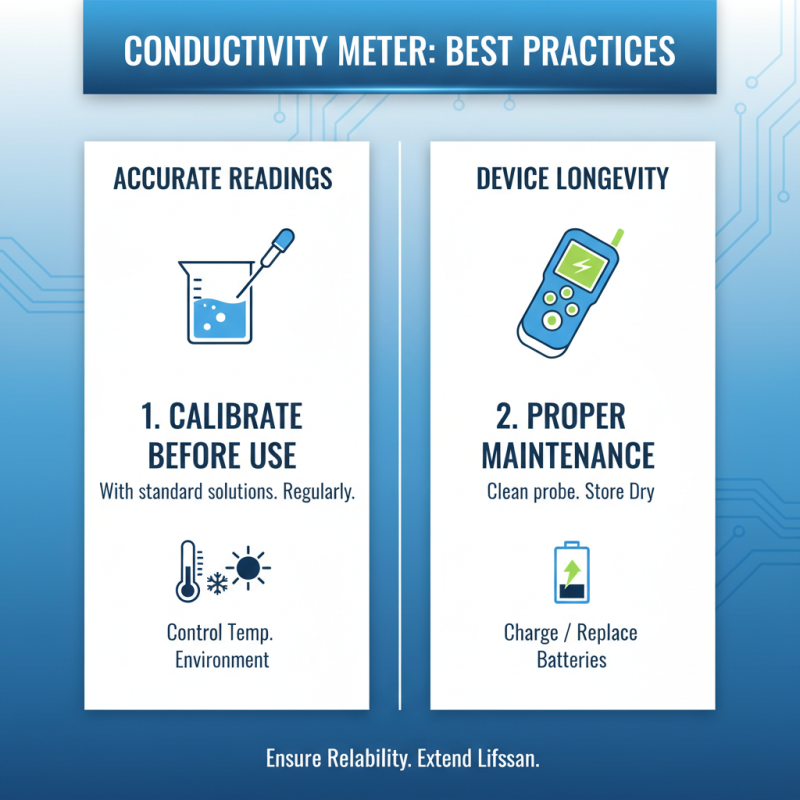
When using and maintaining portable conductivity meters, it’s essential to follow best practices to ensure accurate readings and extend the lifespan of your device. First, always calibrate your meter before use with standard solutions to confirm its accuracy. Calibration ideally should occur regularly, especially if you frequently use the meter in varying conditions. Remember that environmental factors like temperature can affect conductivity readings, so perform calibrations in a controlled environment when possible.
Furthermore, keep the electrodes clean and free from contaminants. Rinse them with distilled water after each measurement to prevent buildup of substances that can interfere with readings. It is also crucial to store the meter properly when not in use; most meters have protective caps for electrodes. Ensure the cap is moist if the meter is designed for wet storage, as this helps maintain the electrode's condition.
**Tips:**
- Regularly inspect all parts of the meter for wear or damage before usage.
- Use protective cases for transport to avoid physical damage.
- Always refer to the manufacturer’s guidelines for specific cleaning and maintenance routines.
Top Portable Conductivity Meters of 2025: A Comparative Review
In the rapidly evolving field of environmental monitoring and industrial applications, the selection of a portable conductivity meter is crucial for accuracy and efficiency. In 2025, various meters are equipped with cutting-edge technology, allowing for real-time data capture and analysis, which is essential for users ranging from environmental scientists to quality control inspectors. Reports from the International Water Association indicate that the demand for portability in conductivity meters has surged by over 30% in the past two years, reflecting a growing need for on-site measurements that can be performed swiftly without sacrificing data integrity.
When comparing the top portable conductivity meters of 2025, several key features emerge as critical factors for consideration. These include measurement range, response time, and battery life. For instance, leading industry reports suggest that models offering a measurement range up to 200 mS/cm and response times under five seconds are preferred by professionals in various sectors. Furthermore, advanced features such as Bluetooth connectivity for seamless data transfer and integration with mobile applications are becoming standard expectations, enabling users to analyze trends and share results instantly. The combination of these functionalities not only enhances measurement accuracy but also improves operational efficiency in diverse environmental settings.