Top Colorimeters for Chlorine Testing What You Need to Know
In the realm of water quality testing, the importance of accurate chlorine measurement cannot be overstated. A colorimeter for chlorine testing is essential for ensuring safe water in various applications. According to the World Health Organization, chlorine should be maintained at levels that are effective for disinfection without compromising safety. Industrial reports indicate that over 80% of water treatment facilities rely on precise chlorine testing to uphold regulatory standards.
Colorimeters are widely recognized for their accuracy and ease of use. However, the market is flooded with options, making it difficult to choose the right tool. Many users overlook specific features that are critical for their needs. For instance, some colorimeters may not account for interferences from other substances present in the water, leading to inaccurate results. This is a significant oversight, especially in environments demanding high levels of precision.
Choosing a colorimeter for chlorine testing is a complex decision. Users must consider factors like the range of detection, ease of calibration, and maintenance requirements. Some models may offer advanced features, yet they might come with a steeper learning curve. Understanding these nuances is vital for making informed choices.

Top Colorimeters for Chlorine Testing: An Overview of Features and Specs
When it comes to chlorine testing, colorimeters are essential tools. They offer precise measurements that help ensure water quality. Many colorimeters feature user-friendly interfaces. Some models include backlit displays that enhance readability in various lighting conditions. Battery life also varies among different colorimeters, affecting how often you need to recharge.
Accuracy is another crucial factor in selecting a colorimeter. Calibration is important for reliable results. Some devices allow for easy calibration, while others may be more complicated. Consider whether you prefer a portable model. Compact designs are great for field testing. However, larger models may provide additional features and enhanced performance in a lab setting.
Keep in mind the price range. Some units are affordable but may lack advanced features. Higher-end models could offer additional functionalities, like data logging. Review your needs carefully before making a decision. The right colorimeter will depend on how often you test and the level of precision required. Investing in a reliable colorimeter can lead to better water quality management. Be prepared to evaluate multiple options, as not every model will meet your expectations perfectly.
Top Colorimeters for Chlorine Testing: An Overview of Features and Specs
| Model |
Measurement Range (mg/L) |
Accuracy |
Display Type |
Battery Life (Hours) |
Weight (grams) |
| Model A |
0.01 - 5.00 |
±0.02 |
LCD |
200 |
250 |
| Model B |
0.05 - 10.00 |
±0.05 |
OLED |
300 |
300 |
| Model C |
0.02 - 15.00 |
±0.03 |
LCD |
250 |
280 |
| Model D |
0.01 - 20.00 |
±0.02 |
TFT |
350 |
320 |
Understanding Chlorine Testing: Importance and Industry Standards
Chlorine testing is crucial in various industries, particularly in
water treatment. Maintaining safe chlorine levels ensures water quality.
According to the World Health Organization, chlorine levels in drinking water
should remain between 0.2 to 4.0 mg/L to effectively kill harmful
bacteria without compromising safety. This delicate balance highlights the importance of accurate testing.
Industry standards require water facilities to employ reliable testing methods. The American Water Works Association recommends adopting calibrated colorimeters for precise readings. Many facilities face challenges, such as equipment inaccuracies and human error. These factors can lead to unsafe water conditions. Regular calibration and maintenance of colorimeters are often neglected in practice, resulting in potentially hazardous situations.
In addition to safety, environmental concerns arise. Over-chlorination can harm aquatic ecosystems. Studies show that elevated chlorine levels can damage fish populations. Testing must not only meet industry standards but also consider ecological impacts. A deeper understanding of chlorine testing emphasizes the dual responsibility of ensuring public health and protecting the environment.
Key Types of Colorimeters for Chlorine Detection and Their Applications
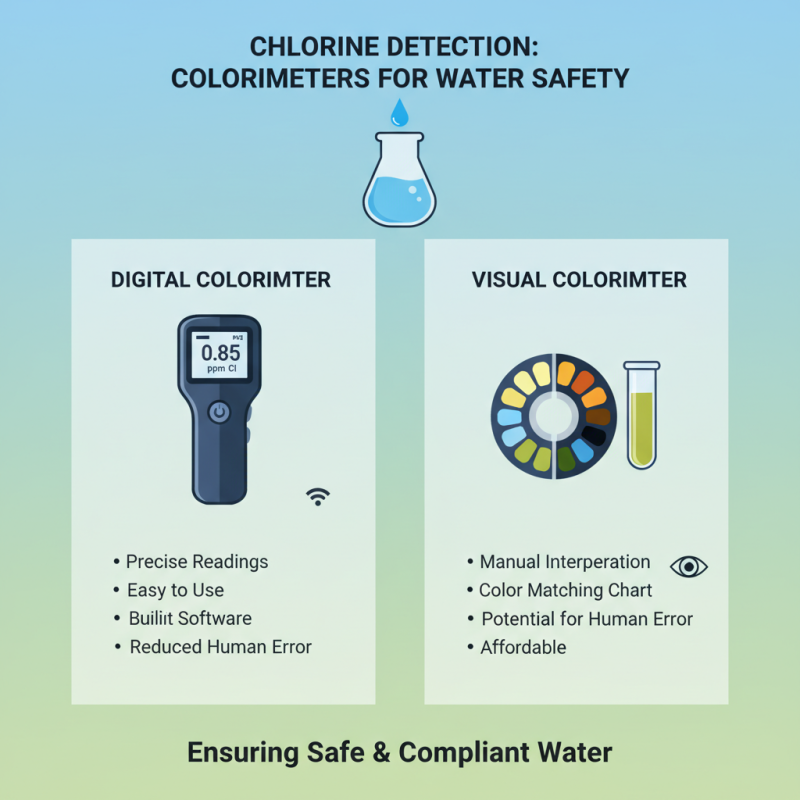
Colorimeters play a crucial role in chlorine detection. They measure the concentration of chlorine in water, ensuring safety and compliance. Two primary types stand out: digital and visual colorimeters. Digital devices provide precise readings and are easier to use. They often come with built-in software for analysis. Visual colorimeters rely on manual interpretation. Users compare color changes on a chart. This method may introduce human error.
Digital colorimeters are preferred in many laboratories. They deliver quick and accurate results. However, they can be costly. Budget constraints may limit access. Visual colorimeters can be a good alternative, especially in field testing. They require no batteries but demand careful handling. Various applications exist for both types in water treatment, swimming pools, and research.
Choosing the right colorimeter requires understanding needs. Evaluate factors like accuracy, portability, and cost. Some users may underestimate the importance of consistent calibration. Neglecting this can lead to misleading results. Selecting the right equipment is essential for reliable chlorine analysis.
Factors to Consider When Choosing a Colorimeter for Chlorine Testing
When selecting a colorimeter for chlorine testing, several factors deserve your attention. Accuracy is crucial. You want to ensure that the colorimeter delivers reliable results. Inaccurate readings can lead to health risks or ineffective chlorination. Look for colorimeters with a good reputation for precision.
Another essential aspect is ease of use. Some devices feature complicated interfaces, which can be frustrating. Choose a colorimeter with a user-friendly design. It should be simple to operate, even for beginners. This can save time and reduce errors during testing.
Portability is a significant consideration too. If you plan to test in various locations, a lightweight and compact colorimeter is ideal. Make sure it fits easily in your bag. Lastly, consider maintenance. Some models require frequent calibration or special care. Understand these requirements before you decide. This can impact your overall experience and satisfaction.
Comparison of Top Colorimeters for Chlorine Testing
Comparative Analysis of Leading Colorimeter Brands in the Market
When it comes to testing chlorine levels, choosing the right colorimeter is crucial. There are several brands on the market, each offering unique features. Some focus on ease of use, while others prioritize accuracy. Understanding these differences can help you select the best option for your needs.
In a comparative analysis, you might find that some colorimeters provide quick readings but lack precision. Others may boast advanced technology but can be overly complex. Many users struggle with calibration processes. It's essential to weigh the trade-offs, as the ideal model differs for every situation. Also, consider the device's portability. A light, compact unit is often more user-friendly, especially in field tests.
Splitting opinions isn’t uncommon. Some users find certain models intuitive, while others face issues with the interface. Infrastructure support varies too, making maintenance a critical factor. If you rely on frequent testing, sufficient support can save time and frustration. Exploring reviews can uncover often-overlooked flaws. Understanding these points can lead to a more informed decision.