7 Best Hach Conductivity Meters for Global Buyers
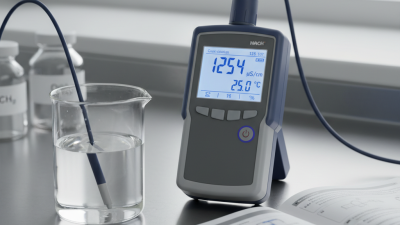
Choosing the right hach conductivity meter requires more than comparing prices or display sizes. Global buyers often need reliable readings across laboratories, treatment facilities, classrooms, and field sites. Water temperature, sample type, measurement range, and calibration habits can affect performance significantly.
This guide reviews seven leading Hach conductivity meters for practical international purchasing decisions. Each option is considered through measurable features, including accuracy, automatic temperature compensation, probe design, display clarity, battery life, and resistance to demanding work conditions. We also consider documentation, replacement sensors, technical support, and regional availability. These details can matter when a meter travels between a clean laboratory bench and a humid sampling area.
Real-world use matters.
A compact meter may suit routine checks, while a benchtop model may provide stronger control for repeated testing. However, no instrument is perfect. A wider range can sometimes add complexity, and advanced functions may remain unused by smaller teams. That point is easy to miss. Buyers should confirm local voltage requirements, language options, warranty terms, and calibration procedures before ordering. Manufacturer specifications provide a useful baseline, but user experience can reveal practical limitations. This comparison aims to connect both perspectives, helping professionals select a dependable instrument without overstating performance or treating one model as universally superior. Even careful recommendations need review when applications, budgets, and operating environments change.
Conductivity Fundamentals: 0.055 µS/cm Ultrapure Water to 200 mS/cm
Conductivity Fundamentals: 0.055 µS/cm Ultrapure Water to 200 mS/cm
Conductivity meters must cover a surprisingly wide measurement range.
At 25°C, ultrapure water reaches about 0.055 µS/cm, equal to 18.18 MΩ·cm resistivity. This value follows the IAPWS reference for water properties. It assumes ideal conditions, including carbon dioxide-free air and balanced temperature. Real laboratories rarely maintain that perfection.
At the opposite end, some industrial liquids approach 200 mS/cm. A single sensor design may struggle across this entire span. Low-conductivity testing needs clean vessels, stable temperature, and carefully matched cell constants. The ASTM D1125 method emphasizes cell calibration and temperature control for reliable measurements. Even fingerprints can distort a low-range reading.
For global buyers, temperature compensation deserves close attention.
The USGS National Field Manual reports specific conductance at a reference temperature, commonly 25°C. Without that correction, a warm sample can appear more conductive than it truly is. Automatic compensation helps, but it does not repair a contaminated probe. Rinse with suitable water, remove trapped bubbles, and allow the display to stabilize.
A practical selection should match the meter’s range, resolution, and chemical environment. Check whether the instrument supports ultrapure water, high-salt samples, or both. Verify calibration options with certified standards. Some specifications look impressive on paper. They may still fail beside a clean beaker and a drifting sample.
Seven Hach Meters Compared by Portable, Benchtop, and Process Applications
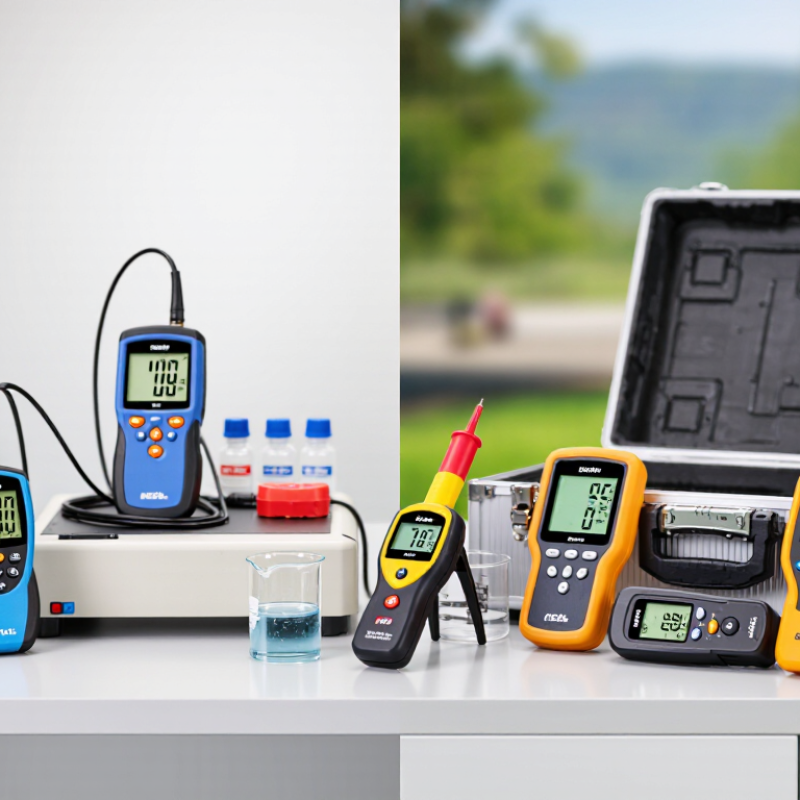
Seven conductivity meters can serve very different working conditions. Three portable meters suit field sampling, where wet gloves, changing temperatures, and limited bench space are common. A compact handheld unit is useful for ponds, cooling water, and rinse checks. A rugged IP-rated model handles splashes better. A higher-range portable meter fits salty samples, but its probe needs careful rinsing between tests.
Two benchtop meters support controlled laboratory work. One offers a larger display and simple calibration prompts for routine quality checks. The other usually provides stronger data handling, temperature compensation, and multiple measuring ranges. These features help when testing purified water, process samples, or prepared solutions. However, advanced menus may slow inexperienced operators. That is easy to overlook.
The final two meters target process applications. An inline sensor can monitor conductivity continuously in a treatment line, while a panel-mounted controller can trigger alarms or support dosing decisions. Installation quality matters as much as instrument accuracy. Air bubbles, buildup, poor grounding, and incorrect cell constants can distort readings. In practice, technicians should verify results with a calibrated reference meter and record sample temperature. No meter removes the need for judgment. Some field results still look questionable, especially after a rushed rinse or a damaged probe.
Global Buyer Criteria: Calibration, IP Ratings, CE Marking, and Service
Global Buyer Criteria: Calibration, IP Ratings, CE Marking, and Service
Selecting a conductivity meter requires more than comparing measurement ranges. The WHO/UNICEF Joint Monitoring Programme reported that 2.2 billion people lacked safely managed drinking water in 2022. Reliable field testing therefore matters, especially where laboratory access is limited. Calibration should use certified standards across the expected range, not only a single midpoint. Look for certificates linked to ISO/IEC 17025 laboratories, with temperature compensation and cell-constant details clearly recorded. Small documentation gaps can create large decisions.
Ingress protection deserves careful attention. IEC 60529 defines IP ratings, but IP68 does not mean unlimited underwater operation. Confirm the tested depth, duration, cable sealing, and connector design. A dusty treatment room needs different protection from a continuously wet sampling site. CE marking indicates conformity with applicable European requirements; it is not a measurement-accuracy certificate. Buyers should request the Declaration of Conformity and verify the relevant electromagnetic compatibility and electrical-safety standards. It sounds obvious, yet many purchasing teams check only the logo.
Service quality often decides whether an instrument remains useful after purchase. Ask about probe replacement, calibration turnaround, firmware support, and regional repair capacity. Keep spare standards and sensors available. A lower purchase price may become expensive after one damaged probe. Independent laboratory verification before deployment is also sensible, although not every buyer budgets for it. That omission is understandable, but still worth reconsidering.
7 Best Conductivity Meters for Global Buyers
Global buyer-priority index based on measurement performance, calibration control, enclosure protection, regulatory conformity, and after-sales support.
Calibration traceability supports reliable measurement comparisons, while IP ratings describe protection against solids and water under IEC 60529. CE marking indicates conformity with applicable European Union requirements. Service coverage, replacement sensors, documentation, and local technical support can strongly affect total ownership value.
Value Assessment: Range, Resolution, Battery Life, and Ownership Cost
7 Best Conductivity Meters for Global Buyers
Value Assessment: Range, Resolution, Battery Life, and Ownership Cost
For global buyers, the best conductivity meter is not always the most expensive model. A practical comparison should examine measurement range, resolution, battery life, and replacement costs. Wide ranges support drinking water, laboratory samples, and industrial liquids, but wider is not automatically better. Resolution matters when readings change slightly, especially near low-conductivity levels. A display showing 0.1 µS/cm can improve decisions, yet only when the probe and calibration are equally precise.
Battery performance affects field work. A meter lasting 40 hours may suit weekly inspections, while frequent sampling requires longer endurance or replaceable batteries. Check charging options before overseas use. Plug compatibility can become an unexpected expense. Ownership cost also includes calibration solutions, probe replacement, protective cases, software, shipping, and staff training. I would not judge value from the purchase price alone. Some cheaper units become costly after one damaged probe.
Tips: Test the meter with standards close to your real samples. Keep a simple maintenance log. Compare warranty coverage, local service access, and spare-part delivery times. Ask whether automatic temperature compensation remains accurate across your working range. A small field trial can reveal handling problems that product sheets miss. Specs look tidy. Real work is messier.
7 Best Hach Conductivity Meters for Global Buyers - Value Assessment: Range, Resolution, Battery Life, and Ownership Cost
| Model ID |
Recommended Application |
Conductivity Range |
Temperature Range |
Lowest Resolution |
Typical Accuracy |
Battery Life |
Ingress Protection |
Estimated 3-Year Ownership Cost |
Value Rating |
| Meter A |
Routine laboratory conductivity testing |
0.01 µS/cm–200.0 mS/cm |
−10 to 110 °C |
0.01 µS/cm |
±0.5% of reading |
Approximately 200 hours |
IP67 |
US$1,250–1,650 |
Excellent |
| Meter B |
Portable field and water-quality surveys |
0.01 µS/cm–200.0 mS/cm |
0 to 100 °C |
0.01 µS/cm |
±0.5% of reading |
Approximately 200 hours |
IP67 |
US$1,350–1,800 |
Excellent |
| Meter C |
Conductivity, salinity, and TDS screening |
0.01 µS/cm–200.0 mS/cm |
0 to 100 °C |
0.01 µS/cm |
±0.5% of reading |
Approximately 200 hours |
IP67 |
US$1,450–1,950 |
Very Good |
| Meter D |
Multi-parameter environmental monitoring |
0.01 µS/cm–200.0 mS/cm |
−10 to 110 °C |
0.01 µS/cm |
±0.5% of reading |
Approximately 200 hours |
IP67 |
US$1,750–2,350 |
Very Good |
| Meter E |
Low-conductivity purified-water testing |
0.01 µS/cm–200.0 mS/cm |
0 to 100 °C |
0.01 µS/cm |
±0.5% of reading |
Approximately 200 hours |
IP67 |
US$1,500–2,050 |
Very Good |
| Meter F |
High-throughput laboratory workflows |
0.01 µS/cm–200.0 mS/cm |
−10 to 110 °C |
0.01 µS/cm |
±0.5% of reading |
Approximately 200 hours |
IP67 |
US$1,900–2,600 |
Good |
| Meter G |
Budget-conscious general-purpose testing |
0.01 µS/cm–200.0 mS/cm |
0 to 100 °C |
0.01 µS/cm |
±0.5% of reading |
Approximately 200 hours |
IP67 |
US$1,050–1,450 |
Excellent |
Ownership-cost estimates include initial purchase, routine calibration standards, replacement batteries, and one preventive-maintenance allowance over three years. Actual specifications and prices may vary by configuration, electrode, region, taxes, and service package.