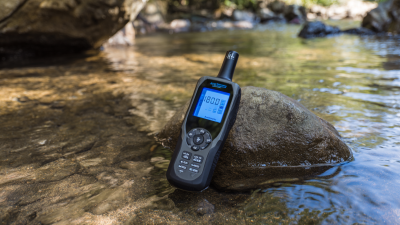
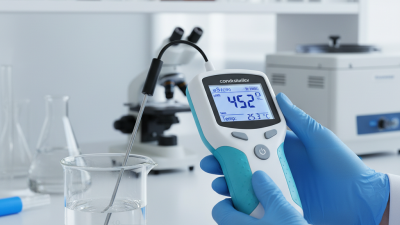
Choosing China’s top hach portable conductivity meter suppliers requires more than comparing online prices. A dependable supplier should demonstrate calibration control, temperature compensation, waterproof construction, electrode quality, and responsive technical support. Field users notice small details: a stable reading beside a treatment tank, clear buttons under gloves, and a probe that rinses clean without trapping bubbles.
The need is substantial. WHO and UNICEF reported that 2.2 billion people lacked safely managed drinking water in 2022, increasing pressure on practical water-quality testing. The U.S. Geological Survey explains that “specific conductance is a measure of the ability of water to conduct an electrical current” (USGS, Water Science School). This principle makes conductivity useful for checking salinity, chemical changes, and process consistency. Dr. John D. Hem, a respected USGS hydrologist, also emphasized the value of interpreting conductivity alongside other water-chemistry results. One reading is never the whole story.
This guide compares Chinese suppliers through an E-E-A-T-focused lens: manufacturing experience, technical documentation, verified product performance, and after-sales reliability. It also considers compliance with relevant measurement practices, including ISO 7888 guidance for electrical conductivity in water. Supplier claims still need scrutiny. Some listings show impressive specifications but provide limited evidence of calibration traceability or long-term field testing. That is an uncomfortable gap. Buyers should request certificates, sample reports, warranty terms, and replacement-probe availability before choosing a hach portable conductivity meter. The strongest supplier may not be the cheapest. It should be the one that remains dependable after repeated testing, transport, cleaning, and operator mistakes.
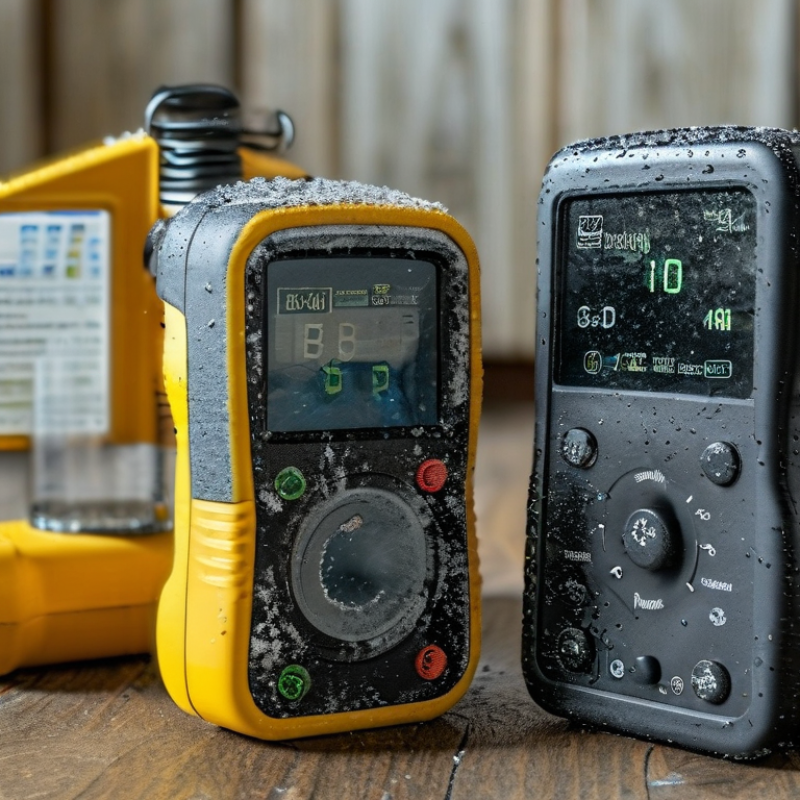
A portable conductivity meter is a handheld instrument for measuring how well water carries an electrical current. This property reflects the concentration of dissolved ions, including salts and minerals. In field testing, the device usually includes a meter, conductivity probe, temperature sensor, and protective case. It may display conductivity, resistivity, salinity, or estimated total dissolved solids.
The process is practical. Rinse the probe with clean water, place it in the sample, and wait for the value to stabilize. Temperature compensation helps reduce errors when water conditions change. Calibration should use a suitable reference solution, not tap water. Small details matter. Air bubbles on the sensor can distort results. Dirty probes can also produce unstable readings. A clear display and simple controls are valuable during outdoor sampling.
Portable models support checks in drinking-water systems, aquariums, laboratories, agriculture, and industrial water treatment. However, conductivity does not identify every contaminant. Two samples can show similar readings while containing different substances. The measurement is useful evidence, not a complete water-quality diagnosis. I would also question unusually precise results from an unverified meter. Battery condition, probe aging, and poor storage may affect reliability. Record the sample temperature, location, calibration date, and reading for better professional review.
Portable conductivity meters help technicians assess dissolved ionic content within seconds. They measure electrical conductivity, usually in µS/cm or mS/cm, and support water quality decisions in the field. Temperature compensation is essential because conductivity changes with temperature. A reliable instrument should offer automatic compensation, a replaceable probe, stable calibration, and clear readings under bright outdoor light.
For buyers comparing Chinese suppliers, practical specifications matter more than attractive packaging. Look for IP-rated housings, calibration records, data logging, and support for one- or two-point calibration. ASTM D1125 and Standard Methods 2510 B provide useful testing references. In my field experience, a clean probe often matters as much as the meter. A neglected cell can create misleading results. That assumption is risky.
Applications range from drinking-water checks to boiler feedwater, cooling systems, aquaculture, hydroponics, and wastewater control. The WHO/UNICEF Joint Monitoring Programme reported that 2.2 billion people lacked safely managed drinking water in 2022. Small meters cannot solve that challenge, but they can improve routine screening. Agriculture accounts for about 70% of global freshwater withdrawals, according to the UNESCO World Water Development Report 2024. Conductivity checks can reveal fertilizer buildup in irrigation water and nutrient imbalance near plant roots. Field conditions remain imperfect. Carrying standard solutions and recording sample temperature are simple safeguards.
Evaluating Chinese suppliers of portable conductivity meters requires more than comparing online prices. Ask for calibration records, technical specifications, and production evidence. A dependable supplier should explain cell constants, measurement ranges, temperature compensation, and accuracy limits clearly. Vague answers are warning signs. Request a sample unit before placing a large order. Test it with certified conductivity standards at low, medium, and high values. Record stability, response time, display readability, and battery performance. Small details matter. Check whether the probe connector feels secure and whether the case survives a wet workbench. These practical observations often reveal more than polished brochures.
Supplier credibility also depends on quality control and support. Review factory certifications, inspection procedures, batch records, and traceability documents. Confirm that calibration certificates identify standards, dates, instruments, and responsible personnel. Ask how rejected units are handled. The answer should be specific, not promotional. Evaluate communication during technical questions; slow or incomplete replies may become serious after delivery. Discuss spare probes, replacement parts, software updates, warranty terms, and training materials. Confirm export packaging and shipping responsibilities in writing. Independent audits can strengthen confidence, but they are not perfect. A site visit may show one prepared area, not every production line. I would keep a written comparison table and score evidence, not promises. Even experienced buyers can overvalue low prices. A cheaper meter may create hidden costs through drift, repeat testing, or unavailable probes. Leave room for doubt, and verify critical claims with your own measurements.
Choosing a portable conductivity meter supplier requires more than comparing prices. Quality begins with stable readings, durable probes, and clear production controls. Ask whether each unit is tested against traceable conductivity standards before shipment. A reliable supplier should provide calibration records, test data, and operating instructions in clear English.
Certification also deserves careful checking. Look for an ISO 9001 quality system and applicable CE or RoHS documentation. These certificates should match the actual model, factory, and product specifications. Do not accept scanned documents without verification. Check the certificate number, issuing body, validity period, and testing scope. Small details matter.
After-sales support often separates a dependable supplier from a temporary seller. Confirm the warranty period, response time, and availability of replacement probes. Ask how technical problems are diagnosed. Can an engineer review unstable readings through photos, videos, or test records? Practical training helps, especially when samples contain temperature changes or suspended particles. A supplier should explain calibration intervals, storage conditions, and cleaning procedures.
Test support before purchase. Send a technical question and measure the reply quality. A fast answer is not always a useful answer. One weakness is commonly overlooked: some suppliers promise broad customization but lack documented procedures. I would request a sample report and a spare-parts list. Even experienced buyers can miss probe compatibility. That mistake becomes expensive after installation. Reliable communication is part of product quality.
| Evaluation Dimension | Recommended Supplier Profile | Quality and Technical Evidence | Certification or Compliance Evidence | After-Sales Support Expectation | Recommended Assessment |
|---|---|---|---|---|---|
| Product Accuracy | Supplier offering meters with documented accuracy specifications and calibration procedures | Published conductivity range, resolution, accuracy, temperature compensation method, and test records for each production batch | Calibration certificate traceable to a recognized national or international measurement standard | Technical guidance for calibration, probe replacement, and measurement troubleshooting | High priority |
| Electrical Safety | Supplier using controlled battery, charger, enclosure, and insulation designs | Electrical safety test reports, battery protection details, ingress protection information, and product risk assessment | Applicable product safety documentation and market-specific declarations where required | Replacement procedure for batteries, chargers, cables, and damaged connectors | Mandatory verification |
| Manufacturing Quality System | Factory with documented incoming inspection, process control, final inspection, and traceability | Inspection plans, nonconformance records, corrective-action reports, serial-number traceability, and sampling procedures | Valid quality-management certification, such as ISO 9001, issued for the relevant manufacturing scope | Formal complaint-handling process with documented corrective and preventive actions | Preferred |
| Calibration and Verification | Supplier able to provide factory calibration and recommended verification intervals | Use of certified conductivity standards, documented reference solutions, and repeatability testing | Calibration records showing instrument identification, standards used, measured values, date, and authorized approval | Remote calibration instructions and access to replacement standards or probes | High priority |
| Environmental Durability | Supplier with a portable design tested for routine laboratory, field, or process environments | Operating-temperature range, storage conditions, enclosure rating, drop-test information, and display readability data | Applicable environmental or ingress-protection test reports when such claims are made | Guidance on cleaning, storage, contamination control, and protection from extreme conditions | Verify for intended use |
| Product Documentation | Supplier providing complete English documentation and controlled revision management | User manual, quick-start guide, specification sheet, calibration instructions, wiring information, and error-code list | Correct model identification, applicable declarations, and consistent information across certificates and manuals | Online access to current manuals, firmware information, and service documents | Preferred |
| Customization Capability | Supplier capable of controlled changes to probes, connectors, language, packaging, or labels | Engineering-change records, prototype approval process, sample validation, and impact assessment | Updated compliance documentation when a customization affects safety, radio functions, or electrical performance | Defined minimum order quantity, lead time, spare-part compatibility, and change-notification policy | Evaluate case by case |
| Spare Parts Availability | Supplier maintaining replaceable probes, cables, batteries, chargers, and protective accessories | Parts list, compatibility matrix, component lifecycle policy, and documented replacement instructions | Replacement parts should retain the original product’s applicable safety and performance requirements | Published availability period, spare-part pricing, and international shipping options | Important for long-term use |
| Warranty and Repairs | Supplier offering written warranty terms with clear exclusions and repair responsibilities | Warranty coverage for instrument defects, repair workflow, returned-material authorization process, and service records | Warranty terms aligned with the destination market and stated product-use conditions | Defined response target, repair or replacement process, and escalation contact for unresolved issues | Mandatory before purchase |
| Pre-Shipment Inspection | Supplier willing to support sample approval and independent or customer inspection | Functional test, conductivity comparison, display and keypad inspection, packaging check, and accessory verification | Inspection documents should identify the exact model, serial number, test date, and acceptance criteria | Clear procedure for handling nonconforming units before shipment | Strongly recommended |
| Supplier Selection Score | Use a documented weighted evaluation rather than price alone | Suggested weighting: quality system 25%, measurement performance 25%, certification evidence 15%, after-sales support 15%, parts availability 10%, delivery capability 10% | Accept only current, scope-matched, and independently verifiable certificates and test reports | Request references, sample evaluation, written service terms, and a defined communication channel | Best-practice approach |
Note: Certification availability, product specifications, warranty terms, and service capabilities must be verified directly with each supplier for the exact model, production site, and destination market before purchase.
China’s top portable conductivity meter suppliers are not always the largest exporters.
The better choice depends on measurement accuracy, production control, and service response. Ask each supplier for recent calibration records, factory photographs, and a sample unit for testing. A polished website is not proof.
Check the meter’s conductivity range, resolution, temperature compensation, and protection rating. For field work, a sealed housing and readable display matter. For laboratory use, repeatability and stable probe performance matter more.
Request tests using standards close to your actual samples. Tap water and concentrated process liquids can expose different weaknesses. Also confirm whether calibration solutions and replacement probes are available locally.
Supplier verification needs patience. Review their quality system, export experience, inspection process, and delivery records. Independent audits or a live video tour can reveal storage and assembly conditions.
Ask about minimum order quantities, custom packaging, software support, and warranty handling. Get every specification in writing, including accuracy at different temperatures.
One mistake is trusting a low quotation too quickly. I would compare total ownership cost, not only the unit price.
Some suppliers communicate quickly before payment, then respond slowly after delivery. Test that risk with detailed technical questions and a small trial order.
Reliability grows from evidence, not promises.