7 Tips to Choose the Best Pocket Colorimeter?

Choosing the right pocket colorimeter is not simply a matter of comparing prices. A reliable device must produce consistent readings in real working conditions. That may mean a bright poolside, a dusty treatment room, or a cold storage area. The best choice depends on the test method, measurement range, sample type, and operator experience.

This guide presents seven practical tips for selecting a pocket colorimeter with greater confidence. It considers wavelength accuracy, reagent compatibility, calibration needs, display visibility, battery life, waterproof protection, and data handling. These details can strongly affect daily testing. Small differences matter.

During field testing, a clear screen and simple buttons can prevent mistakes. A sealed sample chamber can also reduce problems from splashes and fingerprints. However, no instrument is perfect. I once focused too heavily on detection range and overlooked the cost of replacement reagents. That choice seemed reasonable at first. It was not.

A professional selection process should combine manufacturer specifications, independent reviews, user feedback, and documented quality procedures. Always check whether the device follows recognized testing methods. Confirm its accuracy claims under suitable conditions. Review the instruction manual before trusting impressive marketing language. The seven tips below are designed to help laboratories, technicians, educators, and maintenance teams make a practical decision. They also encourage careful comparison, because the cheapest pocket colorimeter may create higher costs over time. Reliable results begin with the right instrument, but good handling remains equally important.
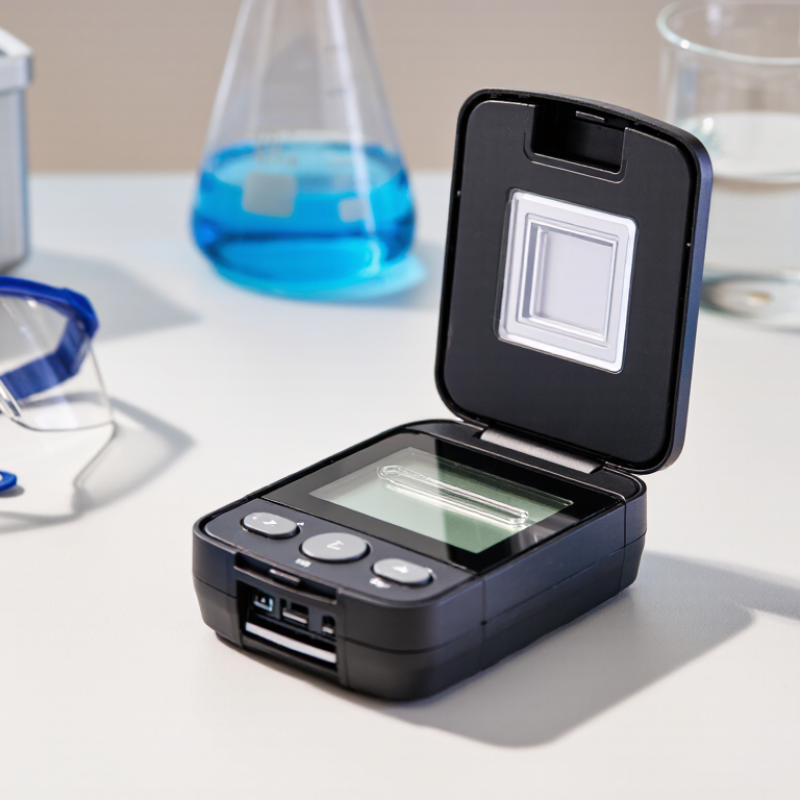
7 Tips to Choose the Best Pocket Colorimeter?

Match the Test Range and Resolution to Target Levels in mg/L

7 Tips to Choose the Best Pocket Colorimeter?

Match the Test Range and Resolution to Target Levels in mg/L

Tip 1: Start with the expected concentration, not the instrument’s largest range.

If your sample usually contains 0.2 mg/L, a 0–100 mg/L meter may hide useful changes. A 0–1 mg/L range can show more practical detail. Check the method’s normal and peak values before buying.

Tip 2: Compare resolution with your decision point.

A reading of 0.1 mg/L is not automatically accurate to 0.1 mg/L. Resolution only describes the displayed steps. Accuracy, repeatability, and detection limits matter too. In field testing, I look for stable results around the target level, especially when readings sit near a limit. Small differences matter.

Tip 3: Test the meter with realistic samples.

Clean water may produce excellent results, while colored or cloudy samples can behave differently. Bring a typical sample, or prepare one near the expected concentration. Record repeated readings. Three tests may reveal drift, handling errors, or a poor fit between range and sample.

Think about units carefully. Some procedures report mg/L as an element, while others use a compound equivalent. That difference can create a misleading comparison. I have seen users choose a suitable-looking range, then discover their reporting basis was different. Verify the test method, reagent instructions, and calibration requirements together. A wider range feels safer, but it may offer less useful resolution.

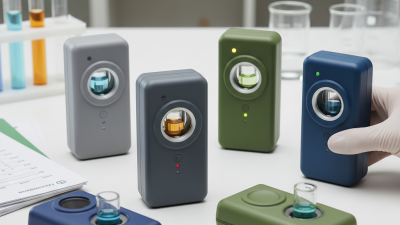
Compare Wavelengths, Accuracy, and ±0.02 Abs Photometric Performance

Choosing the best pocket colorimeter starts with the wavelength, not the screen. Different tests need different peak wavelengths, such as 420, 525, or 600 nanometers. Standard Methods for the Examination of Water and Wastewater, 24th edition, advises method-specific wavelength selection. A convenient wavelength can still produce weak sensitivity. I have seen clear samples show unstable readings when cuvettes were scratched or poorly aligned.

Tip 1: Match the instrument’s wavelength to your test method.

Tip 2: Check stated accuracy beside resolution.

A display showing 0.001 Abs does not guarantee equal measurement accuracy.

The NIST Technical Note 1297 recommends considering repeatability, calibration, and environmental influences when estimating uncertainty. For a claimed ±0.02 Abs photometric performance, ask whether that value applies across the full measuring range, temperature range, and wavelength setting. It may only describe ideal laboratory conditions.

Tip 3: Demand verification data, not attractive specifications.

ASTM E275-08(2023) provides a framework for evaluating spectrophotometer wavelength and photometric performance. Compare blank stability, replicate results, and recovery from known standards.

The WHO/UNICEF Joint Monitoring Programme 2023 report estimated that 2.2 billion people lacked safely managed drinking water in 2022. Field instruments therefore need simple checks, durable optics, and clear error warnings. Smaller meters can be practical. They are not automatically precise. A thoughtful buyer should test the same sample five times, record the spread, and question any result that looks too perfect.

Prioritize EPA-Approved Methods and ISO 7027 Turbidity Compatibility

7 Tips to Choose the Best Pocket Colorimeter

A reliable pocket colorimeter should match an approved testing method, not just offer a bright display. Check whether its chemistry, wavelength, range, and reaction time align with the applicable EPA method. Approval can depend on the complete procedure, including reagents and sampling steps. Do not assume a device is compliant because its brochure uses the word “EPA.” Confirm the method number and request validation documents. That small check can prevent expensive mistakes.

Look for clear, repeatable operation in the field. The instrument should support proper blanking, calibration, and quality-control checks. Choose a model with durable sample cells and readable results under changing light. Battery life matters near treatment tanks or remote wells. Data storage also helps, but only when records include time, location, and operator details. Keep the workflow simple. Complex menus invite rushed decisions.

For turbidity work, verify ISO 7027 compatibility carefully. The instrument should state the measurement principle, wavelength, reporting units, and applicable turbidity range. ISO 7027-related performance may not suit every water matrix or regulatory program. Ask how the device handles bubbles, colored samples, and dirty cells. I have learned that cleaning discipline often affects results more than advanced features. A practical evaluation should compare repeated readings against known standards and real samples. If results drift, pause and investigate instead of trusting the screen.

Evaluate IP67 Protection, Battery Life, and Field Portability

7 Tips to Choose the Best Pocket Colorimeter?

IP67 protection is more than a marketing label. Under IEC 60529, IP67 means complete dust protection and temporary immersion up to one meter for 30 minutes. Check the test conditions, not only the letters. Inspect the battery cover, buttons, and optical chamber seal. A loose cap can ruin field work. Look for a readable display under direct sunlight and wet-gloved operation. These details matter beside rivers, treatment tanks, and muddy sampling sites.

Battery life should match your actual routine. Choose a unit offering several weeks of intermittent testing, rather than relying on a maximum laboratory claim. Rechargeable cells reduce waste, but replaceable batteries help during remote surveys. Check charging time and low-battery behavior. No surprise shutdowns. The U.S. Environmental Protection Agency’s field-method guidance emphasizes consistent procedures, timing, and quality control. A meter that saves results and records calibration time supports better traceability (EPA Method 180.1, revised 2020).

Portability also includes sample handling. A compact case should hold cuvettes, reagents, wipes, and a small waste container. Keep the optical path shaded from rain and strong sunlight. Verify calibration with standards near your working range, as recommended by ISO/IEC 17025 quality practices. I have learned that lighter equipment is not always better; tiny buttons slow testing. Sometimes, simple wins. Review warranty terms, service access, and data export before purchase. Field confidence comes from repeatable measurements, not impressive specifications.

Check Calibration, Reagent Stability, and Cost per 100 Tests

7 Tips to Choose the Best Pocket Colorimeter

Tip 1: Check calibration procedures before comparing features. A reliable meter should support simple user calibration and include clear instructions. Calibration drift can change results, even when the display looks normal. Record calibration dates and standards used. Small records matter.

Tip 2: Ask how often calibration is required under field conditions. Dust, temperature changes, and frequent handling can affect accuracy. Tip 3: Look for verification options, such as a known standard or control solution. In practical testing, users sometimes skip this step when work becomes busy. That shortcut deserves reconsideration.

Tip 4: Examine reagent stability carefully. Check storage temperature, expiration dates, packaging, and light sensitivity. Stable reagents reduce waste and improve consistency between testing days. Tip 5: Confirm whether prepared reagents remain usable after opening. A bottle may seem economical but lose performance quickly. Read the technical data, not only the sales description.

Tip 6: Calculate cost per 100 tests. Include reagents, cuvettes, batteries, standards, and replacement parts. A low purchase price can hide expensive consumables. Tip 7: Compare usable test volume, not package size alone. For example, damaged cuvettes or failed readings may increase real costs. Keep a small allowance for repeat tests. Field experience shows that the cheapest calculation is not always the most realistic.

7 Tips to Choose the Best Pocket Colorimeter? - Check Calibration, Reagent Stability, and Cost per 100 Tests

No. Selection Tip What to Check Practical Benchmark Why It Matters
1 Confirm the Measurement Range Compare the instrument range with the expected concentration of the parameter being tested. Choose a range that covers normal results without frequently exceeding the upper limit. A typical colorimetric range may span from low mg/L values to several hundred mg/L, depending on the test method. Results outside the validated range can be inaccurate and may require dilution, adding time and increasing the chance of handling errors.
2 Check Calibration Requirements Review zeroing, calibration verification, certified standards, and recalibration instructions. Prefer automatic zeroing or guided calibration, a clear calibration record, and verification at a defined interval such as before use, daily, weekly, or according to the method. Regular calibration helps control instrument drift caused by temperature changes, optical aging, contamination, or battery-related issues.
3 Evaluate Reagent Stability Check unopened shelf life, storage temperature, light sensitivity, moisture protection, and stability after opening. Many dry reagents are designed for approximately 12–24 months unopened when stored as instructed. Opened or prepared reagents may have a shorter usable period, often from one day to several months depending on formulation. Stable reagents reduce expired-stock waste and help maintain consistent color development from test to test.
4 Calculate Cost per 100 Tests Include reagents, cuvettes or test vials, standards, shipping, and expected repeat tests. Formula: (Total consumable pack cost ÷ usable tests per pack) × 100.
Example: $36 ÷ 50 tests × 100 = $72 per 100 tests. Typical consumable costs vary widely by parameter and format.
A low purchase price does not always mean a low operating cost. Cost per reportable test gives a more realistic comparison.
5 Assess Accuracy and Precision Look for method-specific accuracy, repeatability, resolution, interference information, and published validation data. Prefer documentation that reports results as bias, recovery, standard deviation, or coefficient of variation rather than using only general claims such as “high accuracy.” Accuracy describes closeness to the true value, while precision describes repeatability. Both are necessary for dependable field measurements.
6 Check Field Durability and Usability Review water and dust protection, operating temperature, battery type, display readability, sample handling, and data storage. A practical field unit should have clear step-by-step operation, replaceable or rechargeable power, a protected sample chamber, and a stated operating range commonly around 5–40°C for general portable use. Good ergonomics and environmental protection reduce invalid tests, downtime, and operator-to-operator variation.
7 Review Total Ownership Cost Consider instrument price, calibration accessories, batteries, cleaning supplies, replacement parts, training, and service. Compare at least a 12-month operating estimate. Include consumables for the planned number of tests plus a reasonable allowance for quality-control checks and repeat measurements. The best value is the unit that delivers reliable results at an acceptable cost per valid test, not necessarily the model with the lowest initial price.
Comparison reminder: Before purchasing, request the method range, calibration procedure, reagent shelf-life statement, validation data, and a written consumables quote based on 100 valid tests. Prices and performance depend on the target parameter, sample type, test chemistry, storage conditions, and local supply costs.