China Top Hach Colorimeter DR300 Suppliers?

Choosing among China’s top Hach colorimeter DR300 suppliers requires more than comparing online prices. Buyers need dependable instruments, traceable standards, and responsive technical support. The Hach colorimeter DR300 is compact, practical, and widely used for chlorine and other routine water tests. Its value depends heavily on supplier reliability.

A strong Chinese supplier should provide genuine Hach products, clear model information, calibration guidance, and documented quality procedures. Ask for serial-number verification, warranty terms, delivery records, and after-sales service details. A supplier with laboratory experience can also explain reagent compatibility, sample preparation, and field storage conditions. Small details matter. A faded reagent label can create serious testing confusion.

Dr. Charles N. Haas, a respected environmental engineering expert, has stated, “Measurements are only as useful as the way they are collected and interpreted.” This principle applies directly to every hach colorimeter dr300 purchase. The device may be accurate, but careless sampling can still produce misleading results. That uncomfortable point is often overlooked.

This guide examines leading China-based suppliers through practical criteria, including product authenticity, technical competence, export experience, response speed, and customer feedback. It does not treat the lowest quotation as the best choice. A cheaper offer may exclude verification support or replacement reagents. Buyers should compare complete ownership costs.

Supplier quality can vary. Even a professional-looking website proves little. Reviewing certificates, factory capabilities, inspection processes, and real customer references remains essential. The best choice is usually the supplier that communicates clearly, documents every claim, and supports the instrument after delivery.
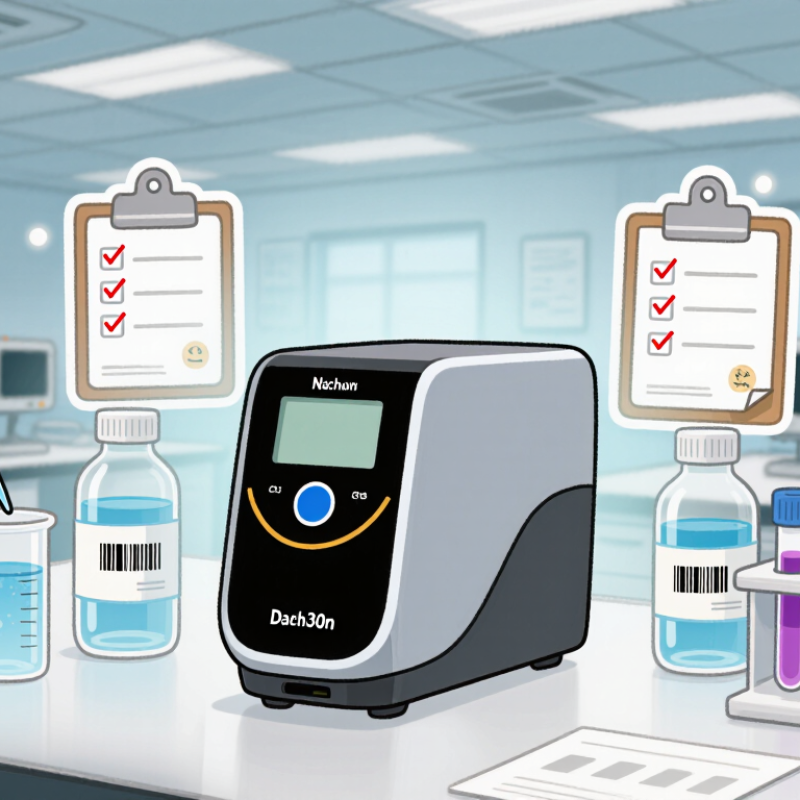
China Top Hach Colorimeter DR300 Suppliers?

What Is the Hach Colorimeter DR300?

A DR300 colorimeter is a handheld photometer for fast water-quality testing. It measures light absorption after a reagent reacts with a target substance. The result appears as a concentration value, often in mg/L or µg/L. Common tests include free chlorine, total chlorine, iron, phosphate, and nitrate. Its compact design suits treatment rooms, field inspections, and facility checks. However, it does not replace laboratory analysis. Sample temperature, expired reagents, fingerprints, and cloudy water can affect accuracy.

The 2023 WHO/UNICEF JMP report estimated that 2.2 billion people lacked safely managed drinking water in 2022. That figure shows why simple field testing still matters. In daily use, operators should compare readings with site records and approved laboratory methods. ISO 7393-2 provides a recognized method for free-chlorine testing with colorimetric procedures. Practical experience suggests that technique often matters more than the display resolution. This point is easy to overlook.

Tips:

Rinse the cell three times before testing. Fill it without bubbles. Wipe the outside with a lint-free cloth. Use a fresh reagent packet and start the timer immediately. Record the sample location, time, temperature, and result. If a reading looks unusual, repeat the test and send a second sample for laboratory confirmation. Calibration checks are useful, but they cannot correct a poorly collected sample.
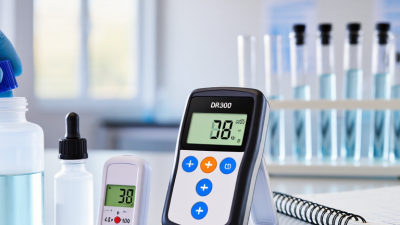
Key Features and Testing Applications of the DR300

The DR300 is a compact handheld colorimeter designed for routine water testing. Its small body fits easily into a field kit, while the clear display supports quick readings near sampling points. Dedicated test methods help reduce setup time and simplify parameter selection. Depending on the configuration, users may measure disinfectant residuals, pH, or other water-quality indicators.

It works with prepared reagents and a measured water sample. The instrument reads color intensity and converts it into a concentration value. In practice, technicians should rinse the cell, remove fingerprints, and check the sample for bubbles before measurement. These details seem minor. They affect repeatability.

The DR300 suits drinking-water checks, swimming-pool monitoring, wastewater screening, and industrial process control. Field staff can compare results between treatment stages or investigate unusual readings beside a storage tank. For reliable data, include a blank test, duplicate measurements, and routine verification with a suitable standard. The device is convenient, but it is not a complete laboratory system. Turbidity, colored samples, expired reagents, and poor timing can distort results. I have found that rushed sampling creates more uncertainty than the instrument itself. Results should be recorded with the sampling time, temperature, method, and operator, especially when trends guide maintenance decisions.

China Top Hach Colorimeter DR300 Suppliers? - Key Features and Testing Applications of the DR300

Data Dimension DR300 Information Testing Application or Practical Value
Instrument Type Portable, battery-operated digital colorimeter designed for field and routine laboratory testing. Suitable for drinking-water checks, wastewater monitoring, process-water control, and on-site verification.
Measurement Principle Photometric measurement of color developed by a parameter-specific chemical reaction. Provides a more objective result than visual color comparison when the correct method and reagent are used.
Parameter Coverage Available configurations support common water-quality parameters such as free chlorine, total chlorine, bromine, chlorine dioxide, ozone, and pH; coverage depends on the selected model and method. Enables disinfectant residual control, treatment-process checks, and compliance-oriented screening.
Wavelength Configuration The optical wavelength is parameter- and model-dependent rather than universal across all versions. The selected wavelength should match the approved chemical method for reliable results.
User Interface Simple keypad operation with a digital display and a guided, step-by-step test workflow. Reduces operator training requirements and supports quick field measurements.
Sample Cell Format Uses a dedicated sample cell or vial that must be clean, correctly filled, and positioned consistently. Proper cell handling helps prevent errors caused by fingerprints, scratches, bubbles, or incorrect orientation.
Reagent Compatibility Testing generally uses parameter-specific powder pillows, tablets, or liquid reagents according to the selected method. Pre-measured reagents can improve consistency and simplify routine testing in the field.
Environmental Protection The instrument family is designed for portable water testing and is commonly specified with an IP67-rated enclosure. The sealed design helps protect against dust and temporary water immersion; it should still be operated within the manufacturer’s stated limits.
Power Supply Battery-powered operation supports use away from mains electricity; battery type and quantity depend on the instrument version. Useful for remote sampling points, inspections, emergency response, and mobile water-quality teams.
Typical Chlorine Testing Supports method-specific testing of free chlorine or total chlorine in treated water, pools, and process-water systems. Helps verify disinfectant residuals and identify under-dosing or excessive dosing.
Drinking-Water Application Can be used for routine checks at treatment plants, storage tanks, distribution points, and sampling locations when an approved method is selected. Supports operational control and trend monitoring of treated-water quality.
Wastewater Application Suitable for selected colorimetric checks in treatment processes, provided that sample preparation and interference controls are followed. Useful for monitoring disinfection stages and supporting process-adjustment decisions.
Industrial Process Water Applicable to cooling water, boiler-related checks, cleaning systems, and other process-water applications where the selected method is appropriate. Provides fast verification before corrective actions or scheduled laboratory analysis.
Result Reliability Factors Accuracy depends on reagent freshness, sample temperature, reaction time, cell cleanliness, correct zeroing, and adherence to the selected procedure. Standardized sampling and quality-control procedures are essential for repeatable results.
Supplier Evaluation Points When comparing suppliers, review the exact parameter model, included accessories, reagent availability, calibration or verification support, documentation, delivery conditions, and after-sales service. These criteria help ensure that the supplied configuration matches the intended testing range and operating environment.

Note: Test parameters, ranges, wavelengths, reagents, and operating specifications vary by the selected DR300 configuration and analytical method. Always confirm the current technical documentation before purchase or regulated testing.

How to Evaluate DR300 Suppliers in China

China Top Hach Colorimeter DR300 Suppliers?

When evaluating DR300 suppliers in China, begin with technical evidence, not catalog photos. Ask for calibration records, inspection reports, and a clear list of included accessories. A reliable supplier should explain measurement range, resolution, battery life, and operating temperature without vague claims. Request a live demonstration using a prepared water sample. Small details matter.

Check the supplier’s manufacturing experience and quality system. Factory photographs are not enough. Ask whether final testing occurs on every unit or only on random samples. Review sample certificates, packaging methods, and replacement procedures. Confirm that the serial number matches the inspection record. This simple check can expose weak traceability. It is easy to overlook.

Communication also reveals professional ability. Suppliers should answer technical questions directly and provide stable documentation in English. Compare response times, warranty terms, spare parts availability, and delivery schedules. Ask for a sample before placing a larger order. Inspect the screen, buttons, cuvette chamber, and printed results yourself. My own evaluation would not rely on price alone; an inexpensive meter may require costly support later. However, a polished factory can still make mistakes, so keep written specifications and acceptance criteria. Payment details, export documents, and product labeling should match the agreed contract. A supplier unwilling to share basic test evidence deserves careful reconsideration.

Top Chinese Supplier Categories and Selection Criteria

China’s suppliers for portable water-testing colorimeters usually fall into four categories: original manufacturers, OEM factories, laboratory equipment distributors, and trading companies. Original manufacturers often control optical design, firmware, and calibration procedures. OEM factories may offer private-label production, but their technical support can vary. Distributors are useful for smaller orders and faster communication. Trading companies provide broad catalogs, yet product specifications sometimes need careful verification.

Selection should begin with measurement performance. Check wavelength stability, detection range, repeatability, and compatibility with standard reagents. Ask for calibration records from recent production batches. A clear test report is more valuable than polished product photos. Confirm battery life, screen readability, waterproof protection, and operation under field conditions. For example, a technician may use the meter beside a warm treatment tank, with wet gloves and limited lighting.

Supplier experience matters. Request sample units, factory videos, quality-control procedures, and spare-part policies. Verify whether the supplier can explain error codes without vague promises. Manufacturing certificates can help, but they should match the actual factory and product. Some suppliers respond quickly before payment, then become slow after delivery. That risk is easy to overlook.

A practical evaluation should include total cost, not only the unit price. Consider reagent supply, shipping, calibration service, training, and replacement accessories. Test several readings against a trusted reference method. Small differences may reveal handling problems, instrument drift, or inconsistent reagents. No supplier is perfect. A written agreement with acceptance standards reduces unpleasant surprises.

Ordering, Quality Checks, and After-Sales Support

China Top Hach Colorimeter DR300 Suppliers?

Ordering a portable DR300 colorimeter requires more than comparing quotations. WHO and UNICEF’s JMP 2023 report states that 2.2 billion people lacked safely managed drinking water in 2022. Reliable field testing therefore matters. Ask suppliers for calibration records, detection ranges, sample cells, and delivery dates. Confirm whether the quotation includes reagents, batteries, carrying cases, and a user manual. A low price can hide missing essentials.

Quality checks should happen before shipment. Request photographs of the serial label, display, cell chamber, and accessories. Check measurement repeatability with certified reference solutions, not only plain water. Ask for test results from several concentration points. ISO/IEC 17025-accredited laboratories can provide stronger verification, although certificates alone do not prove daily performance. UNESCO’s 2024 World Water Development Report notes that agriculture uses about 70% of global freshwater withdrawals. That makes dependable nutrient and water monitoring especially valuable. My own caution: suppliers may promise accuracy, but practical verification is still the buyer’s responsibility.

Tips: Put every requirement in the purchase order. Record reagent lot numbers and test temperatures. Request remote troubleshooting and spare-cell availability. Clarify response times, warranty limits, and return procedures before payment. Keep a short training video from the supplier. It prevents repeated mistakes. No checklist is perfect.

China Top Hach Colorimeter DR300 Suppliers: Ordering, Quality Checks, and After-Sales Support

The chart presents a practical procurement checklist for evaluating colorimeter suppliers without ranking or identifying any specific company or brand. Quality control receives the highest weighting because product verification, calibration records, functional testing, and documentation are essential for reliable laboratory use.

Evaluation weighting: Ordering and fulfillment 25%, quality checks 45%, and after-sales support 30%. Scores are expressed as percentage contributions to the overall supplier assessment.