What Is the Best China Hach Colorimeter Alternative?

Choosing the best China hach colorimeter alternative requires more than comparing prices. Water laboratories, aquaculture facilities, and treatment plants need dependable readings every day. A lower-cost instrument can look attractive, but accuracy depends on calibration, reagents, sample handling, and operator training.

In practical testing, small details matter. A clear display helps technicians work beside a wet sampling bench. A sealed housing may protect the meter from splashes. Stable cuvettes can reduce inconsistent readings between samples. Buyers should check wavelength options, detection ranges, resolution, data storage, and battery performance. They should also confirm whether the device supports the required testing methods and compatible reagents.

The best alternative is not automatically the cheapest Chinese model. It should provide traceable calibration, repeatable results, responsive technical support, and clear documentation. Independent laboratory checks can reveal differences that product brochures hide. Certification may support confidence, but it does not replace real performance testing. This is where judgment becomes difficult. Some instruments offer impressive specifications, yet their long-term service network remains uncertain. Others may feel basic but perform reliably in routine work. A careful comparison should include purchase cost, consumables, maintenance, training, and downtime. My view may change after broader field testing. That is important. Reliable selection requires evidence from actual samples, not attractive claims alone.

What Is the Best China Hach Colorimeter Alternative?

What Is a Hach Colorimeter and What Does It Measure?

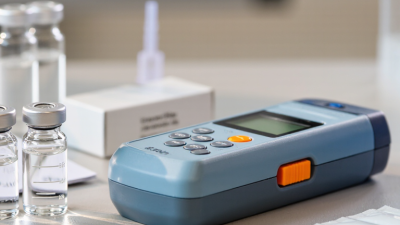
A colorimeter is a compact photometric instrument for measuring chemical concentration. It shines light through a prepared water sample, then detects how much light the sample absorbs. The instrument converts that optical response into a numerical result, usually in milligrams per liter.

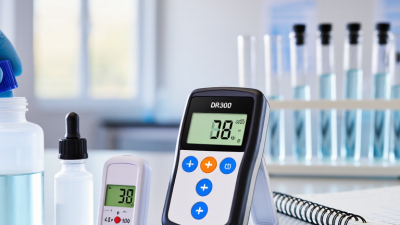
In daily water testing, colorimeters can measure free chlorine, total chlorine, ammonia, nitrate, phosphate, iron, and other parameters. Each test normally needs a specific reagent. The reagent reacts with the target substance and creates a visible color. A pale pink solution may indicate low chlorine, while a deeper color suggests a higher concentration. The exact result depends on wavelength, reaction time, sample volume, and calibration quality.

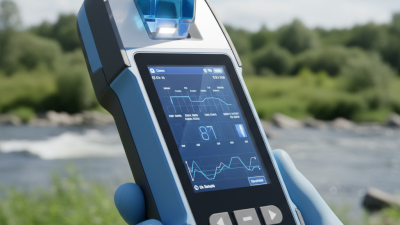
A suitable China-made alternative should offer stable readings and clear operating instructions. Check its measuring range, detection limit, calibration process, cuvette quality, and resistance to field conditions. Battery life matters during outdoor sampling. So does screen visibility under bright sunlight.

Small errors can change the result.

Fingerprints on a cuvette, bubbles, expired reagents, or an unclean sample container may distort measurements. Operators should run blank checks and compare occasional results with an independent laboratory method. A colorimeter is useful, but it is not automatically accurate. Good technique remains essential.

Which Features Define a Reliable Colorimeter Alternative?

A reliable China colorimeter alternative should begin with measurement confidence, not a low purchase price. The optical system needs stable wavelengths, controlled light paths, and repeatable readings under field conditions. Operators should check accuracy, precision, detection limits, and blank correction. These details matter when results guide drinking-water treatment decisions. The WHO/UNICEF Joint Monitoring Programme reported that 2.2 billion people lacked safely managed drinking water in 2022. Measurement errors can therefore carry serious practical consequences.

Strong quality control separates a dependable instrument from a convenient gadget. Look for traceable calibration, automatic zeroing, calibration verification, and clear error alerts. US EPA Method 334.0 emphasizes performance checks and quality-control procedures for colorimetric disinfectant measurements. A useful alternative should support comparable checks, not hide them behind simple “pass” or “fail” screens. It should also accept documented reagent methods and show reaction timing clearly. Small displays are not always a problem. Unclear menus are.

Field durability deserves equal attention. An IP-rated housing, impact-resistant case, replaceable battery, and readable screen help technicians work beside tanks or sampling points. Data logging with timestamps and export functions reduces handwritten transcription errors. ISO/IEC 17025 principles also make traceability and documented competence important for serious testing programs. No instrument is perfect. Even strong devices can drift after harsh transport, and users sometimes skip verification when schedules tighten. That weakness deserves honest planning, including control samples, staff training, and periodic comparison with a reference method.

How Do Chinese Colorimeters Compare with Hach Models?

Chinese colorimeters increasingly compete with established imported models in routine water testing. Their main advantages are lower purchase costs, compact bodies, and simpler field operation. Many provide LED light sources, pre-programmed methods, and rechargeable batteries. However, performance depends on wavelength stability, reagent consistency, and operator technique. A low price does not guarantee dependable results.

The comparison should follow recognized procedures, not product claims. ISO 7027-1:2016 supports controlled optical measurement practices, while ISO/IEC 17025 emphasizes traceable calibration and competent testing. The WHO Guidelines for Drinking-water Quality, including the 2022 addenda, also stress validated methods and quality control. In practical trials, compare repeatability across ten readings, recovery from known standards, and results at different temperatures. Check the sample cell after cleaning. Tiny scratches can distort readings. Chinese units may match imported instruments in routine testing, but higher-level laboratories may prefer stronger documentation and service networks. That difference is often overlooked.

Tips: Request raw validation data before purchasing. Test chlorine, nitrate, or phosphate standards at low and high concentrations. Record bias, detection limits, battery life, and reagent shelf life. Inspect calibration certificates carefully. Field experience matters, yet my own first comparison missed reagent aging, which changed the result more than the instrument. That was an uncomfortable lesson. Reliability needs repeated checks, not one impressive demonstration.

What Is the Best China Hach Colorimeter Alternative? - How Do Chinese Colorimeters Compare with Hach Models?
Comparison Dimension Typical Chinese Colorimeter Configuration Typical Established International Colorimeter Configuration Practical Evaluation
Measurement Principle Visible-light absorbance measurement using LEDs, optical filters, or compact photodiodes. Visible-light absorbance measurement using fixed optical filters, LEDs, or dedicated optical modules. Both configurations are suitable for routine water, environmental, pool, education, and industrial testing when the selected method is properly validated.
Wavelength Configuration Usually one to several fixed wavelengths; common model ranges are approximately 400–900 nm, depending on the optical design. Usually several predefined wavelengths optimized for a published method menu; advanced models may provide a wider wavelength selection. Check whether the required test method uses the correct wavelength and whether the instrument permits user-defined calibration.
Common Test Parameters Often supports disinfectant residuals, pH-related color reactions, nutrients, metals, hardness, alkalinity, and selected industrial parameters. Typically supports a broader standardized method library, including disinfectant residuals, nutrients, metals, hardness, alkalinity, and organic indicators. The number of listed tests is less important than method validation, reagent compatibility, detection range, and local regulatory acceptance.
Typical Sample Format Round vials, rectangular cuvettes, or compact sample cells; many models use approximately 5–25 mL of sample depending on the test method. Dedicated vials or cuvettes, commonly using approximately 5–25 mL of sample depending on the method and instrument design. Using the correct vial path length, sample volume, and orientation is essential for repeatable results.
Photometric Range Common compact instruments measure approximately 0–2.5 or 0–3.0 absorbance units, although the range varies by model. Common portable instruments offer a similar absorbance range, while laboratory-oriented models may provide a wider range. Compare the required concentration range with the method's calibration curve rather than relying only on the maximum absorbance specification.
Photometric Accuracy Typical published specifications are often around ±0.01–0.03 absorbance units or equivalent, depending on wavelength and range. Typical published specifications are often around ±0.005–0.02 absorbance units or equivalent, depending on the instrument class. Independent verification with reference standards is recommended before using any instrument for compliance or process-control decisions.
Repeatability Commonly specified at approximately 1–2% relative standard deviation under controlled conditions. Commonly specified at approximately 0.5–1.5% relative standard deviation under controlled conditions. Actual repeatability depends strongly on reagent quality, sample preparation, timing, temperature, and operator technique.
Calibration Functions Usually includes blank correction, one-point or multipoint calibration, and stored calibration curves on mid-range and higher-end models. Usually includes blank correction, factory method curves, multipoint calibration, and stored user calibration functions. For a replacement purchase, prioritize editable calibration curves and traceable standards over the number of preloaded methods.
Display and Data Storage Color or monochrome displays are common; storage capacity may range from several hundred to several thousand results. Typically includes a larger method library, guided workflows, result history, and expanded data-management functions. Confirm memory capacity, timestamping, operator identification, and audit-trail requirements if results must be documented.
Connectivity USB is common; Bluetooth, wireless transfer, or application support is available on selected models. USB and computer connectivity are common; wireless transfer and integrated data systems are more frequently offered on premium models. Verify operating-system compatibility, export format, cybersecurity requirements, and whether software is included in the purchase price.
Ingress Protection Portable products commonly range from basic splash resistance to approximately IP54–IP67, depending on enclosure design. Portable products commonly range from basic splash resistance to approximately IP54–IP67, depending on enclosure design. Do not assume water resistance from appearance; confirm the exact IP rating and cleaning instructions in the technical documentation.
Power Supply Rechargeable lithium batteries, AA or AAA batteries, USB charging, or an external adapter may be used. Rechargeable batteries or replaceable batteries are common, with external power options on some models. For field use, compare operating time, charging time, battery replacement availability, and performance during low-battery conditions.
Typical Operating Time Approximately 8–40 hours of intermittent operation is common, depending on display type, light source, battery capacity, and connectivity. Approximately 8–40 hours of intermittent operation is also common, with significant variation between instrument classes. Battery endurance should be evaluated together with measurement frequency and field-work conditions rather than as a standalone specification.
Environmental Operating Conditions Many portable units are designed for approximately 5–40°C operation, with relative humidity limits commonly between 80% and 90% non-condensing. Many portable units use a similar operating range, although some products specify narrower or wider environmental limits. Temperature control and sample conditioning can affect color reactions more than small differences in instrument specifications.
Reagent Availability Powder pillows, tablets, liquid reagents, and compatible third-party formulations may be available depending on the method. Often supported by a structured reagent system with method-specific packaging and documented shelf-life information. Before switching instruments, confirm reagent lead time, storage requirements, lot-to-lot consistency, and equivalent method chemistry.
Regulatory and Quality Documentation Documentation may include calibration certificates, user manuals, electrical safety declarations, and regional conformity information. Documentation commonly includes detailed method references, validation information, calibration records, and regional conformity information. Request the exact certificates and test reports for the intended model; conformity marking alone does not prove analytical equivalence.
Purchase Cost Position Often positioned from entry-level to mid-range, with lower initial acquisition cost on many configurations. Often positioned from mid-range to premium, especially when advanced software, method validation, and service coverage are included. Total cost should include reagents, standards, consumables, calibration, training, shipping, software, and after-sales service.
Best-Fit Application Routine screening, field checks, education, small laboratories, process monitoring, and applications where flexible procurement is important. Standardized monitoring programs, regulated laboratories, high-throughput testing, and organizations requiring extensive documentation and support. A well-validated Chinese colorimeter can be a practical alternative when the required method, accuracy, documentation, and service capability are confirmed in advance.
Note: The specifications above represent typical market configurations rather than the specifications of a particular manufacturer or model. Always verify the original datasheet, method validation report, reagent compatibility, calibration certificate, and local compliance requirements before purchase.

What Are the Main Types of China Hach Colorimeter Alternatives?

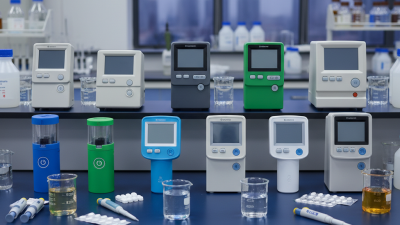
A practical China-made colorimeter alternative should match the testing environment, not only the purchase budget. The main types include portable, benchtop, and online process colorimeters. Each type serves a different working condition.

Portable colorimeters suit field sampling, remote facilities, and quick checks beside tanks or pipelines. They usually use rechargeable batteries, sealed test areas, and simple digital displays. Benchtop models offer better stability for laboratories. They often support larger test menus, timed reactions, and data export. Online process colorimeters monitor water continuously. They can trigger alarms when readings move beyond set limits. However, installation requires careful flow control and regular cleaning. A dirty optical window can create misleading results.

Tips: Check wavelength range, measurement resolution, sample volume, calibration options, and local service support. Test the device with certified reference solutions before routine use. Keep records for temperature, reagent lot, and operator. Small details matter.

In practical evaluation, portable units are convenient but may sacrifice some repeatability. Benchtop instruments feel more dependable, yet they need a stable workspace. Online systems reduce manual sampling, but maintenance is easier to underestimate. No instrument is perfect. The best choice depends on accuracy needs, testing frequency, sample conditions, and staff skill. A short trial with real samples can reveal weaknesses that product sheets often miss.

How Can Buyers Select the Right Chinese Colorimeter?

What Is the Best China Hach Colorimeter Alternative?

Buyers should select a Chinese colorimeter by method compatibility, not by price alone. EPA Method 110.2 and Standard Methods 2120 C require controlled wavelengths, suitable cells, and repeatable photometric readings. Check whether the instrument supports these methods or an equivalent validated procedure. A reliable unit should also offer clear calibration records, stable zero readings, and replaceable sample cells.

Performance must match the testing environment. The WHO/UNICEF Joint Monitoring Programme 2023 update reported that 2.2 billion people lacked safely managed drinking water in 2022. This pressure makes dependable field testing more important. For a treatment plant, choose a sealed housing, rechargeable power, and memory for result storage. For a laboratory, prioritize optical resolution, reagent traceability, and data export. Request verification data across low, medium, and high color ranges.

Do not trust one impressive specification.

Ask for real repeatability results. A supplier should provide calibration certificates, uncertainty information, service response times, and spare-part availability. ASTM D1209 can guide apparent color evaluation for clear liquids, while ISO 7887 supports water-color examination. I would also test the same sample several times, under different operators. Human handling changes results. That part is easy to underestimate. A lower-cost instrument may be sensible, but only when its method fit, documentation, and long-term support are proven. Market reports often highlight rapid growth in portable water-analysis equipment, yet growth does not guarantee accuracy. This is where buyers need careful judgment.