China Top Free Chlorine Colorimeter Suppliers for Buyers

Choosing a free chlorine colorimeter is a practical decision with public-health consequences. The WHO Guidelines for Drinking-water Quality describe operational targets of at least 0.5 mg/L free chlorine after 30 minutes of contact at pH below 8, and at least 0.2 mg/L at delivery. These figures make accuracy, repeatability, and clear operating instructions more than brochure details.

The need for dependable water monitoring is substantial. The WHO/UNICEF Joint Monitoring Programme reported that 2.2 billion people lacked safely managed drinking-water services in 2022. That figure does not measure demand for colorimeters, but it shows why routine testing matters. Water-treatment researcher Dr. Charles N. Haas’s published work on disinfection and risk assessment reinforces a useful principle: treatment decisions should rest on measured conditions, not assumptions. This is a paraphrase of his research, not a direct quotation.

For buyers comparing China-based suppliers, the details are tangible: reagent availability, stated detection range, calibration procedure, sample-cell design, and support after delivery. Ask how the instrument performs with the water you actually test. A clear display helps. So does a supplier who explains limitations plainly. A colorimeter cannot replace sampling discipline or trained operators. It can, however, make residual checks more consistent at a treatment bench, plant outlet, or field site. This introduction examines supplier capabilities, product features, and verification questions. The comparison is useful, but no single specification tells the whole story.
China Top Free Chlorine Colorimeter Suppliers for Buyers

What Free Chlorine Colorimeters Measure and How They Work

Free chlorine colorimeters estimate the concentration of disinfecting chlorine in a water sample, usually reported as milligrams per liter as Cl₂. They do not simply “see” chlorine. A reagent, often based on the DPD color reaction, reacts with free chlorine and develops a pink color. The instrument shines light through the prepared sample and measures how much light the color absorbs. More color generally means a higher reading.

The result depends on careful handling. Rinse the vial, avoid fingerprints, and remove bubbles before inserting it into the meter. Small details matter. Follow the instrument’s timing and reagent instructions; a delayed reading can be misleading. Turbidity, naturally colored water, or other oxidizing substances may also affect the result. In practical testing, repeat a doubtful measurement and compare it with a suitable check standard. Field work is rarely perfect, and one clean display does not prove the sample was prepared correctly. Buyers can compare measurement range, resolution, and available methods against the concentrations they actually need to monitor.
Key Features Buyers Should Compare Before Choosing a Model

When comparing free chlorine colorimeters, match the measurement range to your water samples. A narrow range may suit routine checks, while variable process water can require more flexibility. Small details matter. Confirm that the instrument measures free chlorine, not total chlorine, and check its stated resolution and repeatability. Many models use the DPD colorimetric method, but results still depend on correct reagent dosing and timely testing.

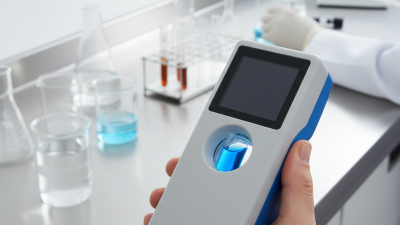
Look closely at the optical design, display, and sample handling. A clear cuvette, consistent filling line, and simple zeroing process can reduce routine errors. Ask how calibration is performed and whether the device flags readings outside its working range. In field use, a compact body and splash resistance may help, though these features do not replace careful handling. Chlorine can change after sampling, so a fast test cycle is useful.

Compare suppliers on more than the quoted instrument price. Request the operating manual, stated test conditions, warranty terms, and availability of reagents and replacement cuvettes. Ask for repeatability data from realistic sample conditions, not only ideal laboratory water. A supplier’s response to technical questions can reveal how well they understand the instrument. I would still verify claims with a trial; specification sheets rarely show every awkward step an operator encounters.

China Top Free Chlorine Colorimeter Suppliers for Buyers - Key Features Buyers Should Compare Before Choosing a Model

Illustrative buyer checklist weighting for comparing free chlorine colorimeters

The point allocations are an example prioritization, not supplier ratings or market-survey results. Compare each model’s stated measuring range, accuracy, repeatability, method, resolution, sample handling, calibration options, durability, and ownership costs against your application. Verify specifications using the manufacturer’s documentation and, where relevant, independent test results.

Types of Chinese Suppliers and Their Manufacturing Capabilities

Chinese free chlorine colorimeter suppliers generally fall into three groups: in-house manufacturers, OEM/ODM producers, and trading or integration firms.

In-house manufacturers may design optical systems, assemble instruments, and develop calibration software. Their capabilities can include LED light sources, fixed-wavelength filters, sample cells, and handheld housings. Many portable models use reagent-based color development, so ask how the instrument handles reagent timing and blank correction. Ask for details.

OEM/ODM producers often adapt an existing platform to a buyer’s requirements, such as display language, measurement range, or data output. Their engineering depth varies. Confirm which functions are developed internally and which depend on outside components.

Trading and integration firms may offer broader sourcing and after-sales coordination, but may have limited control over production changes. A useful assessment includes calibration procedures, repeatability data, and test records from multiple units. Request raw results, not only a specification sheet. Paper specifications rarely show how readings shift when sample temperature changes or cuvettes carry fingerprints. Compare stated performance with a practical trial using the intended water samples, reagents, and operating steps. Some supplier documentation is uneven; clarify gaps before approving a sample.

How to Assess Supplier Quality, Certifications, and Technical Support

For buyers comparing free chlorine colorimeter suppliers in China, supplier quality starts with verifiable measurement performance. Ask for the working range, resolution, stated accuracy, and test conditions. Check whether the instrument uses a recognized DPD colorimetric procedure, such as ISO 7393-2, and request recent calibration records. A specification sheet alone is not enough. I would check it twice.

The World Health Organization’s Guidelines for Drinking-water Quality (2022) recommend at least 0.2 mg/L free chlorine at the point of delivery. That makes low-range performance and repeatability practical concerns, not minor details. Ask suppliers for test data near your actual operating range, plus details on reagents, blank correction, and sample handling. For calibration, look for traceability and, where available, a certificate from a laboratory accredited to ISO/IEC 17025 within the relevant scope. A certificate can still leave gaps; verify what was actually tested.

Technical support matters after delivery. Ask how quickly the supplier responds, whether troubleshooting is available in English, and how replacement cells, caps, and reagents are supplied. Request a sample operating manual and a demonstration using a real water sample. Check warranty terms and repair turnaround in writing. Some support promises sound polished but remain vague. That is worth questioning. A responsive supplier should explain measurement limits plainly, including when sample color or turbidity may affect results.

China Top Free Chlorine Colorimeter Suppliers for Buyers - How to Assess Supplier Quality, Certifications, and Technical Support

Assessment area What to evaluate Evidence to request Buyer’s verification check
Measurement method Confirm whether the instrument uses a DPD colorimetric method or another clearly documented method for free chlorine. Method description, operating procedure, reagent specifications, and applicable test-method references. Check that the method is suitable for the intended water samples and that free chlorine is distinguished from total chlorine where required.
Range and resolution Match the stated measuring range and display resolution to expected sample concentrations and reporting requirements. Datasheet showing range, resolution, units, and any model-specific limitations. Compare the specification with the required application; do not treat resolution as a measure of accuracy.
Accuracy and repeatability Review the manufacturer’s stated accuracy, repeatability, test conditions, and verification procedure. Specification sheet, inspection or test report, and a sample measurement record. Ask how performance was tested and whether the stated figures apply across the full range and under relevant operating conditions.
Sample and reagent handling Assess cuvette requirements, reagent availability, shelf life, storage conditions, and handling steps. User manual, reagent instructions, consumables list, and storage and shelf-life information. Confirm that routine testing is practical and that replacement reagents and compatible cuvettes can be obtained.
Quality management Check whether the supplier operates a documented quality-management system and whether its scope covers relevant manufacturing or service activities. Current quality-system certificate, issuing body details, certificate scope, and validity dates. Verify the certificate with the issuing body or accreditation source. A certificate alone does not establish instrument measurement performance.
Calibration and traceability Determine what calibration or verification is supplied, how reference materials are used, and whether results are traceable where required. Sample calibration certificate, calibration procedure, reference-material details, and service-laboratory information. If accredited calibration is needed, check the laboratory’s ISO/IEC 17025 accreditation scope for the relevant measurement.
Product compliance documents Identify applicable safety, electromagnetic compatibility, and market-access requirements for the destination country and product configuration. Applicable declarations, test reports, product labels, and model-specific compliance documentation. Check that documents refer to the exact model. CE marking, where applicable, addresses relevant EU conformity requirements; it is not proof of analytical accuracy.
Technical support Evaluate response channels, support hours, language coverage, troubleshooting capability, and access to manuals or software updates. Written support policy, response-time targets, service contact details, and sample troubleshooting guidance. Send a product-specific technical question before purchase and assess whether the response is clear, accurate, and timely.
Warranty and repair Review warranty duration and coverage, exclusions, repair location, spare-parts availability, and return procedures. Written warranty terms, repair workflow, parts list, and service turnaround information. Clarify who pays shipping and labor costs, and whether support is available after the warranty period.
Documentation and training Check the completeness and language of operating, maintenance, safety, and troubleshooting instructions. Sample user manual, quick-start guide, maintenance schedule, and available training materials. Confirm that procedures cover blanking, reagent addition, measurement timing, cleaning, and routine checks where applicable.
Quotation and supply terms Compare the complete supply scope, lead time, payment terms, packaging, shipping terms, and replacement-consumable costs. Itemized quotation, delivery schedule, packing details, and consumables pricing. Ensure the quote specifies the exact model, included accessories, documentation, warranty, and any recurring costs.

Buyer note: Use this checklist to compare supplier evidence rather than assuming that a certificate, product listing, or quoted specification guarantees suitability for every application.

Steps for Requesting Quotes and Verifying a Supplier Before Purchase

When requesting quotes for a free chlorine colorimeter, send every supplier the same requirements. Specify the expected chlorine range, sample type, display units, and testing frequency. Include practical details, such as whether measurements happen beside a treatment tank or in a small laboratory. Ask for the quoted price, delivery time, warranty terms, and included items, such as cuvettes, reagents, and a carrying case. Clear details make offers easier to compare.

Be specific. Ask how the instrument is calibrated and what accuracy information is available across its stated range. Request a current instruction manual, calibration guidance, and written confirmation of what the warranty covers. If a supplier claims the meter meets your needs, ask for supporting test records or a demonstration using a suitable sample. A polished product sheet is useful, but it cannot show how clearly the supplier handles technical questions.

Before paying, check that the supplier’s business details match across its quotation, invoice, and correspondence. Ask for recent customer references in a similar application, and confirm that replacement reagents or service support are realistically available. Compare replies for completeness, not just price. A delayed answer is not proof of poor quality, though repeated vague answers deserve attention. I would keep the final comparison in a simple table; small omissions are easy to miss when several quotes arrive at once.