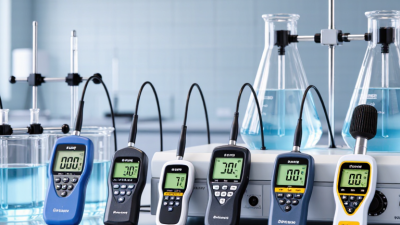
Choosing a lab conductivity meter is not just a matter of comparing screen sizes or price tags. The right instrument should suit the samples, workload, and measurement range your laboratory actually handles. A physicist whose work shaped measurement science, Lord Kelvin, is often quoted: “When you can measure what you are speaking about, and express it in numbers, you know something about it.” That principle fits conductivity testing, where a small calibration error can change a result.
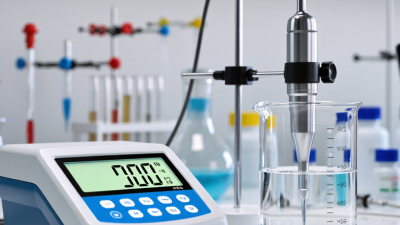
This guide compares ten meters for global buyers, focusing on practical details: conductivity range, cell compatibility, temperature compensation, calibration workflow, data export, and service support. A benchtop meter may suit routine water analysis, while a portable model can make sense for field sampling. Look closely at the electrode and its cell constant. Check whether replacement probes and calibration standards are available in your region. A bright display helps, but reliable readings matter more.
Small details matter. A ranking can still oversimplify: laboratories differ, and the most expensive meter is not automatically the best choice. Consider how the instrument performs with your real samples, including viscous liquids or low-conductivity water, and whether staff can maintain it consistently. The models ahead are assessed against buyer-relevant criteria, not marketing claims alone. Use the comparison as a shortlist, then confirm specifications with manufacturers before purchase.
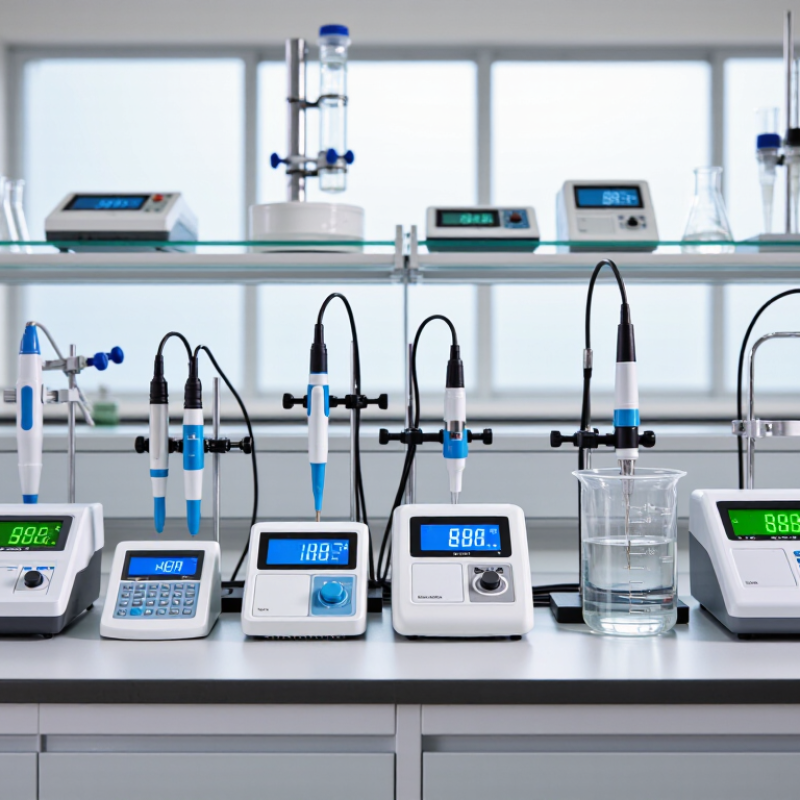
A laboratory conductivity meter estimates how readily a solution carries electrical current. Its probe uses alternating current between electrodes, reducing the effects of electrode polarization. Dissolved ions transport charge, so conductivity generally rises as ionic concentration increases. The reading is usually reported in microsiemens or millisiemens per centimeter. It does not identify which ions are present. Not a chemical fingerprint.
For reliable comparisons, calibrate the meter with a suitable standard and confirm the probe’s cell constant. Rinse the sensor with deionized water, then gently blot it; rubbing can leave residue or create static. Temperature matters. Many meters compensate automatically, but compensation cannot make every sample behave identically. Record sample temperature and method when results need to be compared across laboratories. I still find bubble removal easy to overlook: a small air pocket on the electrode can shift a reading. Let the value stabilize, keep the probe immersed to its marked depth, and avoid touching the container wall. For concentrated or unusual solutions, check the instrument’s range and follow a validated procedure rather than assuming a single reading tells the whole story.
Conductivity meters apply an alternating electrical signal between electrodes and measure how readily ions in a liquid carry current. The result is reported as conductivity, usually in µS/cm or mS/cm. Conductivity indicates the overall ionic contribution; it does not identify or measure individual ions. The profiles below describe common laboratory instrument types, not ranked or branded products.
| No. | Meter profile | Typical laboratory use | Representative measurement range | Probe and cell-constant considerations | How the result is obtained | Buyer checks |
|---|---|---|---|---|---|---|
| 1 | General-purpose benchtop conductivity meter | Routine testing of aqueous samples, process solutions, and laboratory preparations | Approximately 0.1 µS/cm to 200 mS/cm with suitable probes | Interchangeable probes commonly use K = 0.1, 1.0, or 10 cm−1; select the constant for the expected range | Measures conductance between electrodes and applies the probe cell constant to calculate conductivity | Check supported probes, calibration functions, temperature measurement, and the stated accuracy across the working range |
| 2 | High-accuracy benchtop meter | Repeatable analytical work, method development, and quality-control testing | Range depends on the meter and probe; many systems cover low µS/cm through mS/cm levels | A calibrated cell and consistent sample handling are important, especially at low conductivity | Uses an AC measurement to reduce electrode polarization and calculates conductivity from the measured conductance | Review accuracy specifications, calibration-point options, temperature-probe performance, and data-recording features |
| 3 | Ultrapure-water conductivity system | Monitoring high-purity and ultrapure water in laboratory water systems | Designed for very low values; ultrapure water is about 0.055 µS/cm at 25 °C under ideal conditions | Requires a suitable low-conductivity cell, clean flow path, and careful control of contamination and air exposure | Measures the very small ionic conductance of the water; temperature and carbon-dioxide uptake can substantially affect readings | Check low-range resolution, temperature measurement, sample-flow arrangement, and the applicable water-quality method |
| 4 | Low-conductivity meter configuration | Deionized water, dilute solutions, and other samples with low ionic content | Typically configured for low µS/cm ranges; the usable limits depend on the selected cell and instrument | A K = 0.1 cm−1 cell is often used to improve measurement suitability at low conductivity | Determines conductance using a low-range cell and converts it to conductivity with the cell constant | Consider contamination control, cell cleanliness, calibration standards, temperature compensation, and measurement stability |
| 5 | High-conductivity meter configuration | Concentrated salt solutions, brines, and other strongly conducting samples | May extend into tens or hundreds of mS/cm when paired with an appropriate probe | A higher cell constant, such as K = 10 cm−1, is commonly suited to higher-conductivity samples | Measures current response across the probe and converts conductance to conductivity | Confirm the probe’s maximum range, chemical compatibility, temperature limits, and suitability for the sample concentration |
| 6 | Portable laboratory-grade conductivity meter | Measurements at sampling points, in pilot laboratories, or where samples cannot readily be brought to a bench | Varies by instrument and probe; portable systems may cover µS/cm through mS/cm ranges | Choose a cell constant matched to the sample and a probe that can be cleaned and handled reliably | Uses the same electrode-based AC measurement principle as a benchtop meter | Check battery operation, calibration workflow, data storage, temperature-probe design, and protection against the working environment |
| 7 | Multiparameter laboratory meter with conductivity | Laboratories that measure conductivity alongside parameters such as pH or dissolved oxygen | Conductivity range is probe-dependent and should be checked separately from the meter’s other functions | Uses a dedicated conductivity probe; confirm that the probe and channel are compatible | Measures conductivity independently and may display it with other sensor readings | Verify available channels, simultaneous-measurement capability, calibration records, and export formats |
| 8 | Temperature-compensating conductivity meter | Routine comparisons where sample temperature varies between measurements | Depends on the selected conductivity probe and configured measurement range | Uses an integrated or separate temperature sensor; compensation settings should match the sample and method | Reports measured conductivity and may calculate a temperature-compensated value using a selected coefficient or reference temperature | Check whether temperature compensation is linear or configurable; compensation does not make every sample behave identically |
| 9 | Inductive or toroidal conductivity system | Samples that may foul, coat, or corrode conventional exposed electrodes, when the method and range are suitable | Generally used for moderate-to-high conductivity; the actual lower and upper limits depend on the sensor design | Uses an inductive sensor rather than a conventional pair of contacting electrodes | An electrical field induces a response in the conducting liquid, which the instrument converts to conductivity | Check minimum measurable conductivity, sample geometry, chemical compatibility, and whether the method suits the application |
| 10 | Conductivity meter with salinity or TDS calculations | Water testing where estimated salinity or total dissolved solids are useful reporting values | Conductivity range depends on the probe; calculated values are limited by the conductivity measurement and selected conversion method | Usually uses a standard conductivity cell; TDS conversion factors are method- and sample-dependent | Measures conductivity first, then estimates salinity or TDS using a defined relationship or conversion factor | Confirm the calculation scale, conversion factor, reference method, and whether the reported value is an estimate rather than a direct ion analysis |
Selection note: Representative ranges are indicative, not guaranteed specifications for every instrument. The actual range, accuracy, and resolution depend on the meter, probe, cell constant, calibration, sample, and measurement conditions. Automatic temperature compensation adjusts readings according to a selected relationship; it does not identify specific ions or replace sample-specific validation.