2026 Top Pocket Colorimeter Chlorine Types for Buyers?
Choosing a pocket colorimeter chlorine meter is not just a matter of picking the lowest price. Buyers must match its measurement range, reagent method, and field durability to the water they test. A clear display helps. So does a case that keeps dust and wet hands away from the instrument.
The World Health Organization’s Guidelines for Drinking-water Quality (2022) describe a free-chlorine residual of at least 0.5 mg/L after 30 minutes of contact, under specified conditions, and a minimum residual of 0.2 mg/L at delivery. These figures show why range and resolution matter. They are guidance values, not a substitute for local requirements or site-specific procedures. The U.S. EPA’s Method 330.5 documents a DPD colorimetric method for measuring residual chlorine in water. Buyers can use such references to assess whether a meter’s method suits their workflow.
Model types vary. Some prioritize simple routine checks; others offer broader ranges or data-handling features. Reagent handling, calibration checks, sample-cell cleanliness, and battery life can matter more than a crowded feature list. Small details count. A fingerprint on a vial can distort a reading.
WHO water and sanitation expert Dr. Bruce Gordon is a relevant public-health authority, but no verifiable direct quotation from him about pocket colorimeters is available here. It would be misleading to invent one. This guide therefore compares buyer-relevant instrument types against published technical guidance, while recognizing one limitation: specifications alone cannot prove performance in every field setting.
What a Pocket Colorimeter Measures in Chlorine Testing
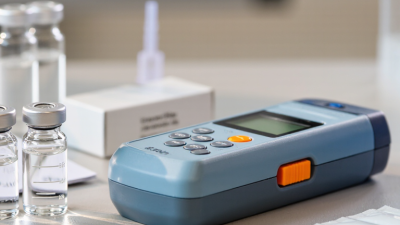
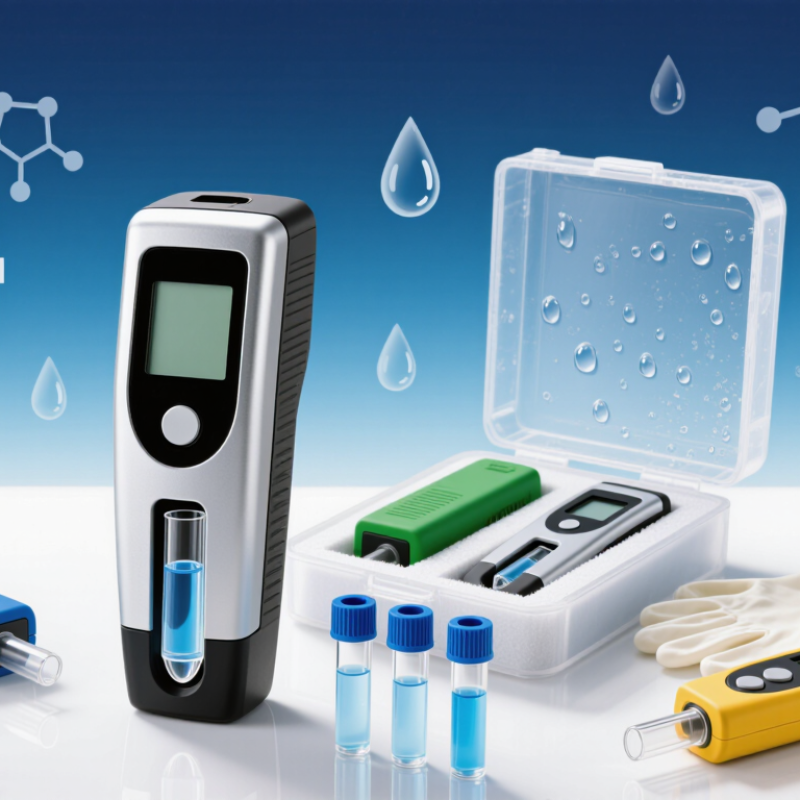
A pocket colorimeter does not simply “see” chlorine in water. It measures light absorbance after a reagent reacts with a water sample, then converts that signal into a concentration. Depending on the method, it may measure free chlorine, total chlorine, or both. Free chlorine includes hypochlorous acid and hypochlorite; total chlorine also includes combined forms such as chloramines. Results are commonly reported as milligrams per litre, expressed as Cl₂. Useful, but not the whole story.
Accuracy depends on the test method and careful handling. A dusty vial, fingerprints, or delayed readings can affect the result. Sample temperature, pH, and other substances may also interfere, so check the instrument’s method instructions. It is tempting to treat one reading as definitive. It isn’t. If a result seems unusual, repeat the test with a fresh sample and review the procedure before making decisions.
Tips: Rinse the vial with sample water, wipe its outside with a clean lint-free cloth, and keep it in the same orientation for each reading. Start the timer when adding reagent. Small details matter.
2026 Pocket Colorimeter Chlorine Types for Buyers
What a pocket colorimeter measures in chlorine testing
Pocket colorimeters use a color-forming reagent and measure light absorbance to report chlorine concentration, typically in mg/L as Cl₂. Depending on the test method, free chlorine or total chlorine is measured; combined chlorine is generally calculated as total chlorine minus free chlorine. Values shown are illustrative sample results, not product specifications or universal limits.
Free, Total, and Combined Chlorine: Key Differences
2026 Top Pocket Colorimeter Chlorine Types for Buyers?
Free, Total, and Combined Chlorine: Key Differences
Free chlorine is the disinfectant still available in water, mainly as hypochlorous acid and hypochlorite. It can respond quickly to contamination, but its effectiveness changes with pH and contact time. Combined chlorine forms when free chlorine reacts with ammonia or other nitrogen compounds. Chloramines remain disinfecting agents, but they generally act more slowly. Total chlorine is the sum of free and combined chlorine. Three terms. Different meanings.
For buyers, a pocket colorimeter should measure free and total chlorine separately if combined chlorine matters. Combined chlorine is usually calculated by subtracting the free result from the total result. That difference can be misleading when either reading is near the instrument’s detection limit. Check the stated range, resolution, and approved test method, such as DPD colorimetry. Follow the reaction timing closely; a late reading can shift the result.
The World Health Organization’s Guidelines for Drinking-water Quality report describes effective chlorination as maintaining at least 0.5 mg/L free chlorine after 30 minutes of contact at pH below 8. It also identifies 0.2 mg/L as a minimum free residual at delivery. These are operational reference points, not universal targets for every system. A useful field habit is to record pH, sample location, and test time beside each reading. Small details matter. I would still question a single result when the water is warm, cloudy, or unusually colored.
2026 Top Pocket Colorimeter Chlorine Types for Buyers? - Free, Total, and Combined Chlorine: Key Differences
| Measurement |
What It Represents |
Common Colorimeter Approach |
How to Interpret the Result |
Buyer Check |
| Free chlorine |
Chlorine available primarily as hypochlorous acid (HOCl) and hypochlorite ion (OCl⁻); it is not combined with ammonia or other nitrogen compounds. |
A DPD free-chlorine procedure typically uses DPD reagent and measures the color formed, reported as mg/L (ppm) as Cl₂. |
Indicates the free-chlorine residual at the time of testing. The relative amounts of HOCl and OCl⁻ vary with pH and temperature. |
Confirm the meter supports a free-chlorine method, the required reagent, and the intended range and reporting units. |
| Combined chlorine |
Chlorine present in chloramines and other combined forms, commonly produced when chlorine reacts with ammonia or nitrogen-containing compounds. |
Usually calculated by subtracting the free-chlorine result from the total-chlorine result; it is not always measured as a separate direct test. |
Combined chlorine = total chlorine − free chlorine. A small difference may be within the combined uncertainty of the two measurements. |
Check that both results use compatible methods, units, sample handling, and reporting basis before calculating the difference. |
| Total chlorine |
The sum of free chlorine and combined chlorine in the sample. |
A common DPD procedure adds a reagent step that allows combined chlorine to contribute to the color measurement; the exact sequence depends on the method. |
Total chlorine = free chlorine + combined chlorine. It does not identify how much is in each form by itself. |
Verify the instrument’s total-chlorine procedure, reagent sequence, reaction time, and stated measurement range. |
| Typical reporting units |
Results are commonly reported as mg/L as Cl₂; in dilute water, mg/L is approximately equal to ppm. |
Use the same units and chlorine-equivalent basis for free and total results when calculating combined chlorine. |
| Sampling and test timing |
Chlorine can change after collection, and light, temperature, contamination, and delays may affect results. |
Collect a representative sample in a clean vessel and follow the method’s instructions for prompt testing, reagent quantities, mixing, and reaction time. |
Note: DPD procedures and performance can vary by instrument and method. Follow the applicable test instructions and verify results when required by your monitoring program.
Main Types of Pocket Chlorine Colorimeters
Pocket chlorine colorimeters mainly come in free-chlorine, total-chlorine, and dual-parameter types.
Free-chlorine models commonly use DPD reagent to measure hypochlorous acid and hypochlorite in a water sample. Total-chlorine models include an additional reaction step to capture combined chlorine, including chloramines. Dual-parameter instruments test both, but usually require separate reagent procedures and readings.
Small distinction. It matters when checking a pool, process-water line, or drinking-water residual.
For method selection, ISO 7393-2:2017 describes DPD colorimetric procedures for determining free and total chlorine in water. The US EPA’s drinking-water rules set a chlorine maximum residual disinfectant level of 4.0 mg/L; this is a regulatory limit, not a routine operating target. A colorimeter should therefore match the expected concentration range, not just display both chlorine types. Check whether its stated range covers the sample, and confirm reagent compatibility and resolution. In field use, cloudy samples, fingerprints on the vial, or delayed readings can shift results.
Easy to overlook. Dual testing can save kit space, though it does not remove the need for careful sampling.
Choosing a Colorimeter for Your Testing Needs
Choosing a pocket colorimeter starts with the chlorine result you actually need.
Free chlorine and total chlorine are different measurements, so confirm that the instrument and its approved method support your testing goal. A pool operator may check free chlorine routinely, while a process technician may need both readings to assess combined chlorine. Small details matter. Check the measurement range, resolution, and sample volume before buying. A wide range can sound safer, but it may make small changes near your normal operating level harder to spot. Not always.
Think about where and how the meter will be used. In the field, a scratched sample cell, wet hands, or a delayed reagent addition can affect repeatability. Look for clear timing instructions, a display that is easy to read outdoors, and cells that are simple to clean and replace. Confirm whether the method uses reagents, and check their storage needs and shelf life. A blank measurement can help account for sample color, but only when the procedure calls for one. Keep a written record of sampling time, temperature, and results; inconsistent sampling can make reliable equipment look unreliable. The best choice is not necessarily the most feature-rich model. It is the one whose method, range, and daily handling fit your actual samples, with enough room to question results that seem unexpectedly high or low.